Search Engine Optimization (SEO) is one of the most valuable digital marketing skills in today’s online world. Whether you’re a business owner, blogger, freelancer, or aspiring digital marketer, understanding SEO can help you attract more visitors, generate leads, and grow your online presence without relying entirely on paid advertising.
Every day, billions of searches are performed on Google as people look for products, services, answers to questions, and local businesses. If your website appears on the first page of those search results, you have a much better chance of attracting potential customers. However, if your website is buried on the second or third page, it’s unlikely to receive much traffic.
This is where SEO comes in. By optimizing your website and content for search engines, you improve your chances of ranking higher, increasing visibility, and driving organic traffic. In 2026, SEO has also evolved alongside Artificial Intelligence (AI), with search engines becoming smarter at understanding user intent and rewarding helpful, high-quality content.
In this guide, you’ll learn what SEO is, how it works, why it’s important, the different types of SEO, and how beginners can get started with Search Engine Optimization.
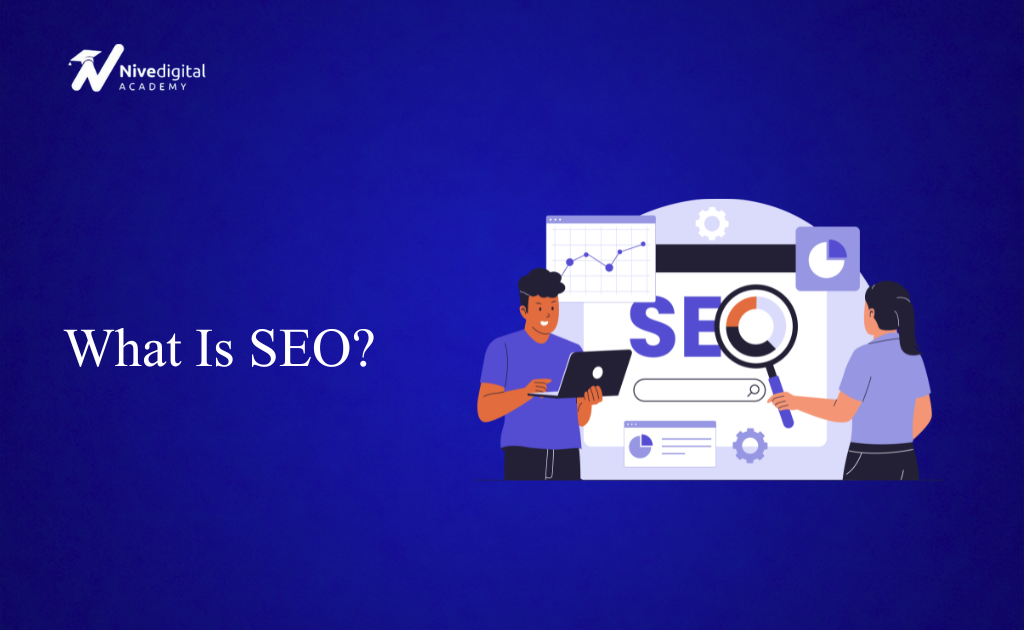
What Is SEO?
SEO stands for Search Engine Optimization. It is the process of improving a website so that it ranks higher in search engine results pages (SERPs) for relevant keywords and phrases.
The goal of SEO is to increase organic traffic, which refers to visitors who find your website through unpaid search results rather than advertisements.
For example, imagine you own a bakery in Lagos. If someone searches for “best bakery in Lagos” and your website appears among the top results on Google, that visibility is often the result of effective SEO.
SEO helps search engines understand:
- What your website is about
- Which keywords your pages target
- Whether your content is helpful
- How trustworthy your website is
- Whether users have a good experience on your site
When your website meets these expectations, search engines are more likely to rank it higher.
How Does SEO Work?
Search engines like Google use automated programs called crawlers or bots to discover websites across the internet.
The SEO process generally involves three stages:
Crawling
Google discovers web pages by following links from one page to another. It scans websites to find new or updated content.
Indexing
After crawling a page, Google stores and organizes its content in a massive database called the search index.

If your page isn’t indexed, it won’t appear in Google Search results.
Ranking
When someone performs a search, Google’s algorithm evaluates millions of pages and ranks the most relevant and helpful results based on hundreds of ranking factors.
SEO helps improve your website so it performs better during this ranking process.
Why Is SEO Important?
SEO is one of the most cost-effective marketing strategies because it brings people to your website when they’re already searching for what you offer.
Here are some of the biggest benefits of SEO.
Increases Organic Traffic
Ranking on Google’s first page can drive thousands of visitors to your website without paying for every click.
Builds Trust and Credibility
Users generally trust websites that appear near the top of search results. High rankings often improve your brand’s credibility.
Generates More Leads and Sales
SEO attracts people with clear search intent. These visitors are often more likely to become customers because they’re actively looking for products or services.
Delivers Long-Term Results
Unlike paid advertising, which stops producing results once your budget runs out, SEO can continue driving traffic for months or even years after content is published.
Improves User Experience
SEO isn’t just about search engines. It also focuses on creating faster, mobile-friendly, and easy-to-navigate websites that provide a better experience for visitors.
Types of SEO
SEO consists of several different areas, each playing an important role in improving a website’s visibility.
On-Page SEO
On-page SEO involves optimizing elements directly on your website.
Examples include:
- Keyword optimization
- Page titles
- Meta descriptions
- Headings
- Internal links
- Image optimization
- High-quality content
- URL structure
On-page SEO helps search engines understand the purpose of each page.
Off-Page SEO
Off-page SEO focuses on activities outside your website that improve authority and trust.
This includes:
- Backlinks
- Brand mentions
- Guest posting
- Digital PR
- Social sharing
High-quality backlinks from reputable websites remain an important ranking signal.
Technical SEO
Technical SEO ensures search engines can easily crawl and index your website.
It includes:
- Website speed
- Mobile responsiveness
- XML sitemaps
- Robots.txt
- HTTPS security
- Structured data
- Fixing crawl errors
A technically sound website performs better in search results and provides a better user experience.
Local SEO
Local SEO helps businesses appear in location-based searches.
For example:
- Restaurants
- Hotels
- Hospitals
- Salons
- Schools
- Law firms
Optimizing your Google Business Profile, collecting customer reviews, and using location-specific keywords can improve local rankings.
Key Elements of SEO
Successful SEO campaigns combine several important components.
Keyword Research
Keyword research identifies the words and phrases people search for on Google.
Choosing the right keywords helps you create content that matches user intent.
Quality Content
Content remains one of the most important parts of SEO.
Your content should:
- Answer users’ questions
- Solve problems
- Be easy to read
- Be original
- Be accurate
- Provide value
Google rewards content that demonstrates expertise and genuinely helps users.
Internal Linking
Internal links connect pages within your website.
Benefits include:
- Helping visitors navigate your site
- Passing authority between pages
- Improving crawlability
- Supporting topical authority
Backlinks
Backlinks are links from other websites pointing to your content.
They signal that other websites trust your information.
However, quality matters much more than quantity.
User Experience
Google wants users to have positive experiences.
Important user experience factors include:
- Fast loading speed
- Mobile-friendly design
- Easy navigation
- Secure website
- Clear page layout
A better user experience often leads to better SEO performance.
SEO Ranking Factors
Although Google uses hundreds of ranking signals, some of the most important include:
- Helpful, high-quality content
- Search intent
- Keyword relevance
- Website authority
- Quality backlinks
- Mobile friendliness
- Core Web Vitals
- HTTPS security
- Internal linking
- Fresh content
- Technical SEO
- User experience
No single factor guarantees high rankings. Successful SEO combines all of these elements into a comprehensive strategy.
Best SEO Tools
SEO professionals rely on various tools to improve performance and make informed decisions.
Popular SEO tools include:
- Google Search Console
- Google Analytics
- Ahrefs
- Semrush
- Ubersuggest
- Google Keyword Planner
- Screaming Frog SEO Spider
- PageSpeed Insights
- ChatGPT
- Google Gemini
These tools help with keyword research, technical audits, competitor analysis, performance tracking, and content optimization.
Common SEO Mistakes to Avoid
Many beginners make mistakes that prevent their websites from ranking well.
Some common mistakes include:
- Keyword stuffing
- Publishing thin or low-quality content
- Ignoring search intent
- Slow-loading websites
- Duplicate content
- Broken links
- Poor internal linking
- Not optimizing for mobile devices
- Buying low-quality backlinks
- Neglecting technical SEO
Avoiding these mistakes will improve your chances of achieving better rankings over time.
Is SEO Still Worth Learning in 2026?
Absolutely.
Although Artificial Intelligence has changed how search engines work, SEO remains one of the most valuable digital skills.
Today’s SEO is less about manipulating algorithms and more about creating useful, trustworthy, and user-focused content.
Businesses continue investing in SEO because it delivers long-term traffic, qualified leads, and sustainable growth.
Professionals who understand both SEO and AI are especially valuable because they know how to use modern tools while maintaining quality and strategic thinking.
Learn SEO at Nivedigital Academy
If you’re serious about learning SEO, practical experience is far more valuable than simply reading articles or watching videos.
At Nivedigital Academy, we teach SEO through hands-on training designed to prepare students for real-world projects. Our curriculum covers keyword research, on-page SEO, technical SEO, local SEO, content optimization, link-building strategies, Google Search Console, Google Analytics, website audits, and AI-powered SEO techniques.
Students don’t just learn theory—they work on live websites, perform SEO audits, optimize content, and understand how search engines rank pages in today’s AI-driven landscape. You’ll also gain experience using industry-standard tools and develop a portfolio that demonstrates your skills to employers and clients.
Whether you’re a beginner looking to start a career, a freelancer wanting to attract more clients, or a business owner aiming to grow your website’s visibility, our practical SEO training equips you with the knowledge and confidence to succeed.
Frequently Asked Questions (FAQs)
What does SEO stand for?
SEO stands for Search Engine Optimization, which is the process of improving a website’s visibility in search engine results to attract more organic traffic.
Is SEO free?
SEO itself doesn’t require paying search engines to rank. However, businesses often invest in SEO tools, content creation, and professional expertise to achieve better results.
How long does SEO take?
SEO is a long-term strategy. Depending on your website, competition, and industry, noticeable improvements may take several weeks to several months.
Can beginners learn SEO?
Yes. Anyone can learn SEO with consistent practice and hands-on experience. Starting with the fundamentals and applying them to real websites is the best approach.
Is SEO better than Google Ads?
SEO and Google Ads serve different purposes. SEO focuses on long-term organic traffic, while Google Ads provides immediate visibility through paid advertising. Many businesses benefit from using both strategies together.
Does AI replace SEO?
No. AI is changing how SEO is performed, but it doesn’t replace it. AI helps with research, content creation, and analysis, while human expertise remains essential for developing effective SEO strategies.
Conclusion
Search Engine Optimization is one of the most effective ways to increase your website’s visibility, attract targeted visitors, and grow your business online. By understanding how search engines work and applying best practices such as keyword research, content optimization, technical improvements, and link building, you can improve your chances of ranking higher in search results.
As search engines continue to evolve with Artificial Intelligence, successful SEO is becoming more focused on creating valuable, trustworthy, and user-centered content rather than simply optimizing for algorithms. Businesses that invest in high-quality SEO today are better positioned to build long-term authority, generate consistent organic traffic, and stay ahead of the competition.
Whether you’re a beginner, entrepreneur, or aspiring digital marketer, learning SEO is a worthwhile investment that can open doors to exciting career opportunities and sustainable business growth in 2026 and beyond.