Performance marketing has become one of the fastest-growing areas of digital marketing because it focuses on one thing that every business cares about—results. Instead of paying for advertising with no clear way to measure success, businesses using performance marketing pay based on specific actions such as clicks, leads, app installs, or sales. This data-driven approach allows companies to track every marketing dollar and optimize campaigns for better returns.
NiveDigital Academy is a leading digital marketing training institute in Nigeria. Learn practical digital marketing skills, master SEO, social media marketing, Google Ads, content marketing, and more — and build the skills you need to grow a business, get clients, or start a career in digital marketing.
Whether you’re shopping online, clicking a Google ad, signing up for a newsletter, or downloading a mobile app, you’ve likely interacted with a performance marketing campaign. Businesses of all sizes—from startups to multinational brands—use performance marketing to generate measurable outcomes while controlling advertising costs.
In 2026, performance marketing has become even more powerful with the rise of Artificial Intelligence (AI). AI tools help marketers analyze customer behavior, optimize bidding strategies, personalize advertisements, predict campaign performance, and automate repetitive tasks. However, while AI improves efficiency, successful performance marketing still requires strategic planning, audience research, compelling ad creatives, and continuous optimization.
If you’re considering a career in digital marketing, running your own business, or simply want to understand how modern online advertising works, learning performance marketing is an excellent place to start.
In this guide, you’ll learn what performance marketing is, how it works, its benefits, popular channels, important metrics, required skills, and why it’s one of the most valuable digital marketing disciplines in 2026.
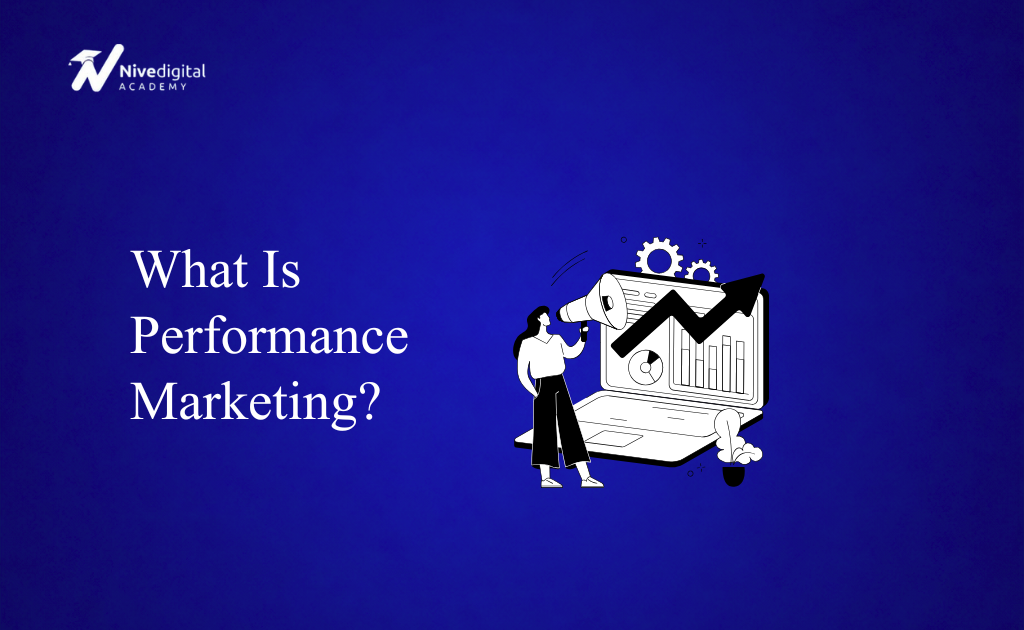
What Is Performance Marketing?
Performance marketing is a type of digital marketing where advertisers pay only when a specific action is completed.
These actions may include:
- Clicking an advertisement
- Filling out a lead form
- Purchasing a product
- Installing a mobile app
- Registering for a webinar
- Downloading an eBook
- Subscribing to an email list
Unlike traditional advertising, where businesses often pay simply to display an advertisement, performance marketing focuses on measurable outcomes.
For example, instead of paying a fixed amount for a billboard that may or may not generate customers, a business running a Google Ads campaign might only pay when someone clicks the advertisement or completes a purchase.
This makes performance marketing one of the most efficient and accountable forms of advertising available today.
How Does Performance Marketing Work?
Performance marketing involves several participants working together to achieve measurable results.
Advertiser
The advertiser is the business promoting a product or service.
Their goal might be to:
- Generate sales
- Increase leads
- Grow website traffic
- Build brand awareness
- Acquire new customers
The advertiser sets campaign goals, budgets, and performance targets.
Marketing Platform
Advertising platforms display campaigns to potential customers.
Popular platforms include:
- Google Ads
- Facebook Ads
- Instagram Ads
- TikTok Ads
- LinkedIn Ads
- YouTube Ads
These platforms help businesses reach highly targeted audiences.
Customer
The customer sees the advertisement and takes an action.
Actions might include:
- Clicking an ad
- Purchasing a product
- Completing a registration form
- Downloading an app
The customer’s action determines whether the advertiser pays.
Tracking
One of the biggest advantages of performance marketing is tracking.
Businesses can monitor:
- Clicks
- Impressions
- Leads
- Sales
- Revenue
- Conversion rates
- Return on investment
This allows marketers to optimize campaigns continuously.
Performance Marketing vs Traditional Marketing
Many people confuse performance marketing with traditional advertising, but there are significant differences.
Traditional Marketing
Traditional marketing includes:
- Television
- Radio
- Newspapers
- Billboards
- Magazines
Businesses typically pay for exposure regardless of whether customers take action.
Performance measurement is often limited.
Performance Marketing
Performance marketing focuses on measurable actions.
Businesses know:
- How many people clicked
- How many converted
- Cost per lead
- Cost per sale
- Revenue generated
- Advertising return
This transparency makes decision-making much easier.
Performance Marketing vs Digital Marketing
Although many people use the terms interchangeably, they aren’t exactly the same.
Digital marketing is the broader category that includes all online marketing activities.
Performance marketing is one part of digital marketing that specifically focuses on measurable results.
For example:
Digital marketing includes:
- SEO
- Content Marketing
- Email Marketing
- Social Media Marketing
- Branding
- Performance Marketing
Performance marketing focuses on campaigns where success is measured using clear performance indicators such as leads, sales, and conversions.
Benefits of Performance Marketing
Performance marketing has become popular because it offers several advantages over traditional advertising.
Measurable Results
Every campaign can be tracked using real data.
Businesses know exactly how campaigns perform.
Better Return on Investment
Budgets can be optimized based on performance.
Poor-performing ads can be paused while successful campaigns receive more investment.
Precise Audience Targeting
Advertisers can target audiences based on:
- Location
- Age
- Interests
- Gender
- Device
- Online behavior
- Previous purchases
This improves campaign efficiency.
Flexible Budgets
Businesses can start with relatively small budgets and scale campaigns as performance improves.
Faster Growth
Performance marketing can generate:
- Immediate website traffic
- Quick leads
- Online sales
- App downloads
Unlike SEO, results can begin almost immediately after campaigns launch.
Data-Driven Decisions
Instead of guessing what works, marketers rely on performance data to improve campaigns continuously.
Types of Performance Marketing
Performance marketing includes several advertising strategies.
Search Engine Advertising
Search advertising displays ads when users search for specific keywords.
Google Ads is the most popular example.
Businesses bid on keywords related to their products or services.
Social Media Advertising
Platforms like Facebook, Instagram, TikTok, and LinkedIn allow businesses to target highly specific audiences.
These ads generate:
- Sales
- Leads
- Website traffic
- Brand awareness
Affiliate Marketing
Affiliate marketers promote products using unique referral links.
Affiliates earn commissions whenever customers complete desired actions.
Native Advertising
Native ads blend naturally with website content, making advertisements appear less intrusive.
Display Advertising
Display ads appear on websites across advertising networks.
They commonly include:
- Images
- Banners
- Interactive advertisements
Influencer Marketing
Businesses partner with content creators to promote products.
Performance can be measured using:
- Sales
- Referral links
- Discount codes
- Website traffic
Remarketing
Remarketing targets users who previously visited your website but didn’t convert.
These campaigns often achieve higher conversion rates because the audience is already familiar with your business.
Best Performance Marketing Channels
Choosing the right marketing channel is one of the most important decisions in performance marketing. Every platform has its strengths, target audience, and advertising formats. The best channel depends on your business goals, budget, and the type of customers you want to reach.
Google Ads
Google Ads is one of the most effective performance marketing platforms because it targets people who are actively searching for products or services.
For example, someone searching for “SEO Course in Nigeria” or “Best Laptop Under ₦500,000” already has purchase intent. This makes Google Ads highly effective for lead generation and sales.
Google Ads offers various campaign types, including:
- Search Ads
- Display Ads
- Shopping Ads
- Video Ads
- Performance Max Campaigns
- App Campaigns
Businesses across different industries use Google Ads because of its ability to reach customers at the right moment.
Meta Ads
Meta Ads allow businesses to advertise on Facebook, Instagram, Messenger, and the Meta Audience Network.
These platforms offer detailed audience targeting based on:
- Interests
- Age
- Gender
- Location
- Online behavior
- Purchase history
Meta Ads are particularly effective for eCommerce, local businesses, coaches, real estate companies, educational institutions, and service-based businesses.
LinkedIn Ads
LinkedIn is the leading platform for B2B marketing.
Businesses use LinkedIn Ads to target:
- CEOs
- Managers
- HR professionals
- Business owners
- Decision-makers
LinkedIn advertising works well for professional services, software companies, recruitment agencies, and corporate training providers.
TikTok Ads
TikTok has become one of the fastest-growing advertising platforms in recent years.
Brands use TikTok Ads to:
- Increase brand awareness
- Drive website traffic
- Generate product sales
- Promote mobile apps
Short-form videos and engaging content perform particularly well on TikTok.
YouTube Ads
YouTube is the world’s second-largest search engine after Google.
Businesses use YouTube Ads to:
- Demonstrate products
- Educate customers
- Increase brand awareness
- Generate leads
- Drive conversions
Video advertising continues to grow because consumers increasingly prefer watching videos over reading lengthy text.
Native Advertising
Native advertising places promotional content within websites in a way that matches the surrounding content.
Instead of appearing as obvious advertisements, native ads feel more like recommendations or editorial content, often leading to higher engagement.
Important Performance Marketing Metrics
Performance marketing relies heavily on data. Understanding key metrics helps marketers evaluate campaign success and identify areas for improvement.
Cost Per Click (CPC)
CPC measures how much you pay whenever someone clicks your advertisement.
Lower CPCs generally indicate more efficient campaigns, although quality traffic is more important than simply having low costs.
Cost Per Lead (CPL)
CPL measures how much it costs to generate one qualified lead.
Businesses that focus on lead generation closely monitor this metric to ensure advertising remains profitable.
Cost Per Acquisition (CPA)
CPA measures how much it costs to acquire one customer or complete one conversion.
This is one of the most important performance marketing metrics because it directly relates advertising costs to business results.
Click-Through Rate (CTR)
CTR measures the percentage of people who click an advertisement after seeing it.
A higher CTR usually indicates:
- Better targeting
- More compelling headlines
- Relevant advertisements
Conversion Rate
The conversion rate measures the percentage of visitors who complete a desired action.
For example:
- Purchase a product
- Fill out a form
- Register for a course
- Download an eBook
Improving conversion rates often produces better returns than simply increasing website traffic.
Return on Ad Spend (ROAS)
ROAS measures how much revenue is generated for every amount spent on advertising.
For example, if you spend ₦100,000 on advertising and generate ₦500,000 in revenue, your ROAS is 5:1.
Higher ROAS generally indicates more successful campaigns.
Return on Investment (ROI)
ROI evaluates the overall profitability of marketing campaigns after accounting for all associated costs.
Businesses use ROI to determine whether campaigns contribute positively to business growth.
Cost Per Thousand Impressions (CPM)
CPM measures the cost of displaying an advertisement one thousand times.
This metric is commonly used in brand awareness campaigns where visibility matters more than immediate conversions.
Best Performance Marketing Tools
Successful marketers rely on various tools to improve campaign performance and analyze data.
Some of the most popular performance marketing tools include:
Google Ads
Google’s advertising platform remains essential for search, display, shopping, and video advertising.
Google Analytics
Google Analytics helps businesses understand website traffic, customer behavior, conversions, and marketing performance.
Meta Ads Manager
This platform manages advertising campaigns across Facebook and Instagram.
It provides audience insights, campaign reports, and optimization recommendations.
Google Tag Manager
Google Tag Manager simplifies the implementation of tracking codes without constantly modifying website code.
It helps marketers accurately track conversions and user behavior.
Looker Studio
Looker Studio transforms marketing data into visual dashboards, making campaign reporting easier.
Semrush
Semrush supports keyword research, competitor analysis, advertising research, SEO, and content marketing.
Ahrefs
Ahrefs is widely used for backlink analysis, competitor research, keyword research, and SEO auditing.
HubSpot
HubSpot combines CRM, marketing automation, email marketing, lead management, and analytics into one platform.
ChatGPT
Modern performance marketers increasingly use ChatGPT for:
- Writing ad copy
- Brainstorming campaign ideas
- Creating landing page content
- Research
- Marketing strategy
Canva
Canva allows marketers to create professional advertising creatives quickly without advanced graphic design experience.
Skills Every Performance Marketer Needs
Performance marketing combines creativity with data analysis.
Important skills include:
- Google Ads
- Meta Ads
- Copywriting
- Landing Page Optimization
- Conversion Rate Optimization
- Google Analytics
- Audience Research
- Keyword Research
- Marketing Automation
- AI Prompting
- Data Analysis
- A/B Testing
- Budget Management
- Communication Skills
The more skills you develop, the more valuable you become to employers and clients.
Is Performance Marketing a Good Career in 2026?
Yes.
Performance marketing continues to be one of the highest-paying areas of digital marketing because businesses care about measurable results.
Companies are constantly looking for professionals who can:
- Generate leads
- Increase online sales
- Reduce advertising costs
- Improve campaign performance
- Analyze marketing data
Career opportunities include:
- Performance Marketing Specialist
- PPC Specialist
- Google Ads Specialist
- Paid Media Manager
- Growth Marketer
- Digital Marketing Manager
- Marketing Analyst
- Freelance Performance Marketer
Many professionals also build successful agencies or consult for businesses after gaining experience.
With AI improving campaign management, performance marketers who understand both technology and strategy will continue to be in high demand.
Learn Performance Marketing at Nivedigital Academy
Performance marketing is about much more than launching advertisements. To consistently achieve profitable results, you need to understand audience targeting, keyword research, campaign optimization, conversion tracking, analytics, landing page optimization, and data interpretation.
At Nivedigital Academy, our Digital Marketing program provides practical training in performance marketing using real-world projects and industry-standard tools. Students learn how to create, manage, and optimize Google Ads, Meta Ads, YouTube Ads, and other paid advertising campaigns while understanding the principles behind successful digital marketing.
Our curriculum also covers Search Engine Optimization (SEO), Google Analytics, Google Tag Manager, content marketing, marketing automation, AI-powered marketing tools, conversion optimization, and website development. Rather than relying solely on theory, students gain hands-on experience by working on practical assignments that simulate real business challenges.
Whether you’re looking to become a freelance performance marketer, work for a digital marketing agency, grow your own business, or pursue a career in paid advertising, Nivedigital Academy equips you with the practical knowledge, mentorship, and confidence needed to succeed in today’s competitive digital landscape.
Frequently Asked Questions (FAQs)
What is performance marketing?
Performance marketing is a form of digital marketing where advertisers pay based on measurable actions such as clicks, leads, sales, app installs, or conversions rather than simply paying for advertisement exposure.
Is performance marketing the same as digital marketing?
No. Digital marketing is a broad category that includes SEO, content marketing, email marketing, social media marketing, and more. Performance marketing is a specialized area of digital marketing focused on measurable campaign results.
What are examples of performance marketing?
Examples include Google Ads, Facebook Ads, Instagram Ads, affiliate marketing, display advertising, remarketing campaigns, and YouTube advertising.
Which platforms are best for performance marketing?
Popular platforms include Google Ads, Meta Ads, LinkedIn Ads, TikTok Ads, YouTube Ads, and native advertising networks. The best platform depends on your audience and business goals.
Is performance marketing a good career?
Yes. Businesses increasingly hire performance marketers because they help generate measurable results, improve return on investment, and drive business growth.
Do I need coding to become a performance marketer?
No. Coding is not required, although basic knowledge of websites, landing pages, and tracking tools can be helpful.
How long does it take to learn performance marketing?
Most beginners can learn the fundamentals within a few months through consistent practice. Mastering campaign optimization, analytics, and strategy typically requires hands-on experience.
Is AI changing performance marketing?
Yes. AI helps marketers automate bidding, analyze data, personalize advertisements, predict campaign performance, and improve efficiency. However, strategic thinking and human decision-making remain essential.
Conclusion
Performance marketing has transformed the way businesses advertise by shifting the focus from exposure to measurable results. Instead of relying on guesswork, companies can track every click, lead, conversion, and sale, allowing them to make smarter marketing decisions and maximize their return on investment.
As digital advertising continues to evolve, performance marketing remains one of the most valuable skills for marketers, entrepreneurs, and businesses. The combination of advanced advertising platforms, detailed analytics, and AI-powered optimization enables marketers to reach the right audience, improve campaign performance, and achieve sustainable business growth.
Whether you’re planning to launch your own business, become a freelance marketer, or build a career in digital marketing, learning performance marketing is a worthwhile investment. By mastering advertising platforms, understanding key performance metrics, and continuously optimizing campaigns, you’ll be well-equipped to succeed in the rapidly evolving digital landscape of 2026 and beyond.