Digital marketing has become one of the most valuable skills in today’s digital economy. Whether you’re a business owner trying to attract more customers, a student looking for a high-income career, or an entrepreneur wanting to grow an online business, understanding digital marketing is no longer optional—it’s essential.
NiveDigital Academy is a leading digital marketing training institute in Nigeria. Learn practical digital marketing skills, master SEO, social media marketing, Google Ads, content marketing, and more — and build the skills you need to grow a business, get clients, or start a career in digital marketing.
Over the last decade, the way people buy products and services has changed dramatically. Instead of relying on newspapers, radio, television, or billboards, consumers now search on Google, browse social media, watch YouTube videos, read online reviews, and interact with brands through websites, emails, and messaging apps before making purchasing decisions.
In 2026, Artificial Intelligence (AI) has accelerated this transformation even further. Tools like ChatGPT, Google Gemini, Claude, AI-powered search engines, and marketing automation platforms are helping businesses create content faster, analyze customer behavior, personalize marketing campaigns, and improve productivity. However, while AI has changed how digital marketing is executed, it hasn’t replaced the need for skilled digital marketers. In fact, professionals who know how to combine AI with marketing strategy are now among the most sought-after talent in the industry.
Businesses of all sizes, from startups and local shops to multinational corporations—are investing heavily in digital marketing because it offers measurable results, better audience targeting, and a higher return on investment than many traditional marketing methods.
Whether your goal is to increase sales, build brand awareness, generate leads, or start a rewarding career, learning digital marketing can open countless opportunities.
In this comprehensive guide, you’ll learn what digital marketing is, how it works, why it’s important, the different types of digital marketing, and how beginners can build successful careers in the AI era.
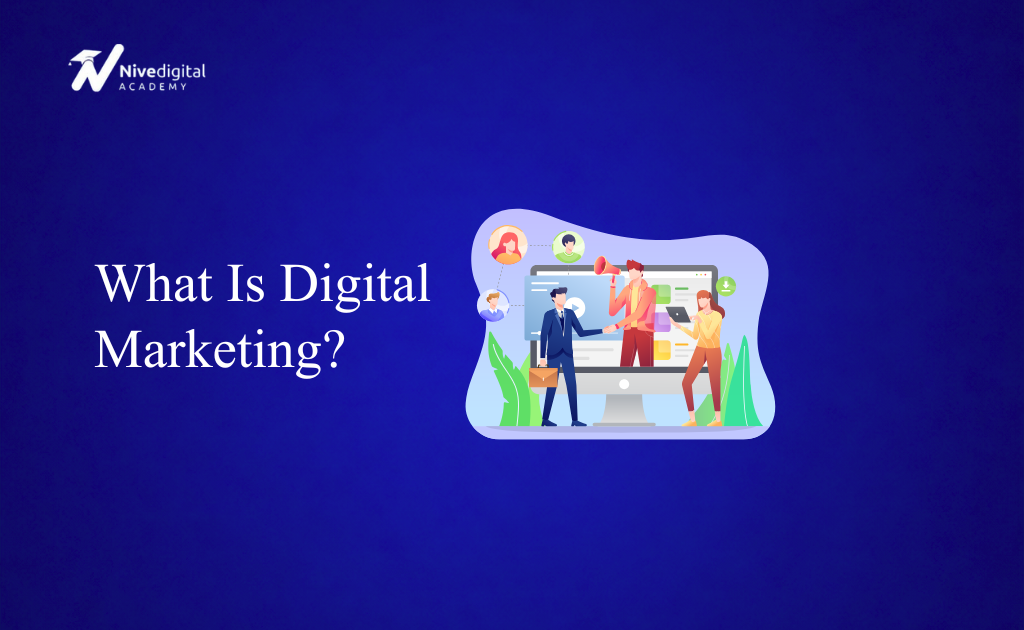
What Is Digital Marketing?
Digital marketing is the process of promoting products, services, or brands using digital channels such as search engines, websites, social media platforms, email, mobile applications, and online advertising.
Unlike traditional marketing, which relies on offline channels like newspapers, radio, television, and billboards, digital marketing allows businesses to reach customers where they spend most of their time—online.
For example, when you:
- Search for a product on Google
- See an advert on Facebook or Instagram
- Watch a sponsored YouTube video
- Receive a promotional email
- Click a Google Ads campaign
- Read a helpful blog article
- Download a free eBook from a website
you’re experiencing digital marketing.
The goal of digital marketing is not just to attract visitors but to convert those visitors into paying customers and build long-term relationships with them.
Because almost everyone uses the internet daily, digital marketing has become one of the most effective ways for businesses to connect with their target audience.
Traditional Marketing vs Digital Marketing
Understanding the difference between traditional marketing and digital marketing helps explain why businesses are shifting more of their budgets online.
Traditional Marketing
Traditional marketing includes offline advertising methods such as:
- Television commercials
- Radio advertisements
- Newspapers
- Magazines
- Flyers
- Billboards
- Direct mail
While these methods can still be effective, they often require larger budgets and provide limited performance tracking.
Digital Marketing
Digital marketing uses online channels to reach potential customers.
Examples include:
- Google Search
- Websites
- TikTok
- YouTube
- Email Marketing
- WhatsApp Marketing
- Google Ads
Unlike traditional marketing, digital marketing allows businesses to measure nearly every aspect of a campaign, including website traffic, clicks, conversions, customer behavior, and return on investment.
This makes it easier to improve campaigns and maximize marketing budgets.
How Does Digital Marketing Work?
Digital marketing follows a customer journey that guides potential customers from discovering a business to becoming loyal buyers.
Awareness
The customer first discovers your business through Google, social media, online ads, YouTube, or referrals.
For example, someone searching for “Best Digital Marketing Course in Nigeria“ may find your website through Google Search.
Interest
After discovering your business, the customer begins learning more by reading your website, watching videos, or following your social media pages.
Helpful content builds trust during this stage.
Consideration
The customer compares your products or services with competitors.
They may read reviews, compare pricing, download brochures, or ask questions before making a decision.
Purchase
If your marketing effectively addresses their needs, they become a paying customer.
This could involve:
- Buying a product
- Registering for a course
- Booking a consultation
- Completing an online payment
Retention
Digital marketing doesn’t stop after a sale.
Businesses continue engaging customers through:
- Email newsletters
- Customer support
- Exclusive offers
- Helpful content
- Loyalty programs
Satisfied customers are more likely to make repeat purchases.
Advocacy
Happy customers often recommend businesses to friends, family, or colleagues through reviews, testimonials, referrals, and social media.
This creates additional organic growth for the business.
Why Digital Marketing Is More Important Than Ever in the AI Era
The digital landscape has evolved rapidly over the past few years, and AI has become one of the biggest drivers of this change.
Today’s consumers expect fast answers, personalized experiences, and relevant content. Businesses that fail to adapt risk losing customers to competitors who embrace digital technologies.
Here are some reasons digital marketing is more important than ever in 2026:
More People Are Online
Millions of Nigerians use smartphones and internet-enabled devices every day to search for information, compare products, shop online, and interact with businesses.
A strong online presence helps businesses reach these potential customers where they already spend their time.
AI Is Improving Marketing Efficiency
AI tools help marketers:
- Generate content ideas
- Write first drafts
- Analyze customer data
- Personalize marketing campaigns
- Automate repetitive tasks
- Improve customer support
- Optimize advertising campaigns
Instead of replacing marketers, AI enables them to work faster and make better decisions.
Search Has Changed
People no longer rely solely on traditional search engines.
Today, users search using:
- AI-powered search tools
- Voice assistants
- YouTube
- Social media platforms
Businesses must optimize their content for multiple search experiences.
Consumers Expect Personalization
Modern customers want businesses to understand their needs.
Digital marketing allows brands to deliver personalized content, product recommendations, and targeted advertisements based on customer behavior.
Better Performance Tracking
Unlike traditional advertising, digital marketing provides measurable insights into campaign performance.
Businesses can monitor:
- Website traffic
- Clicks
- Leads
- Sales
- Customer behavior
- Conversion rates
These insights help marketers improve campaigns and achieve better results.
Types of Digital Marketing
Digital marketing consists of several specialized areas. Understanding each one helps businesses create effective marketing strategies.
1. Search Engine Optimization (SEO)
Search Engine Optimization, commonly known as SEO, is the process of improving a website’s visibility in search engines like Google.
The objective is to rank higher for relevant keywords and attract organic (free) traffic.
SEO involves:
- Keyword research
- Content optimization
- Technical SEO
- Link building
- Local SEO
- Website performance improvements
For example, if someone searches for “Digital Marketing Course in Lagos”, SEO helps your website appear in the search results.
SEO is considered one of the highest-return digital marketing strategies because it continues generating traffic long after content is published.
2. Search Engine Marketing (SEM)
Search Engine Marketing involves paying for advertisements that appear in search engine results.
The most common platform is Google Ads.
Businesses bid on keywords so their advertisements appear when people search for products or services.
Benefits include:
- Immediate visibility
- Fast lead generation
- Precise audience targeting
- Measurable results
Unlike SEO, which takes time, Google Ads can begin generating traffic almost immediately after campaigns are launched.
3. Social Media Marketing
Social Media Marketing involves promoting businesses through platforms such as:
- TikTok
- X
- YouTube
Businesses use social media to:
- Increase brand awareness
- Engage customers
- Share valuable content
- Build communities
- Generate leads
- Drive website traffic
Paid advertising on social media also allows businesses to target specific audiences based on age, location, interests, behavior, and demographics.
When used consistently, social media marketing strengthens customer relationships and builds brand loyalty.
4. Content Marketing
Content marketing focuses on creating valuable, relevant, and helpful content that attracts and educates potential customers.
Instead of directly selling products, businesses provide information that solves problems and answers questions.
Common content formats include:
- Blog posts
- Articles
- Videos
- Podcasts
- Infographics
- Case studies
- E-books
- Guides
- Checklists
High-quality content builds trust, improves SEO, generates leads, and positions businesses as authorities within their industries.
One of the biggest advantages of content marketing is its long-term value. A well-written article can continue attracting visitors and generating leads for years after publication.
5. Email Marketing
Email marketing remains one of the most effective and profitable forms of digital marketing, even in the AI era. While new platforms continue to emerge, email remains a direct communication channel that businesses own and control.
Email marketing involves sending targeted messages to subscribers to build relationships, promote products or services, share valuable content, and encourage repeat purchases.
Businesses commonly use email marketing for:
- Welcome emails
- Newsletters
- Product launches
- Promotional campaigns
- Event invitations
- Customer education
- Abandoned cart reminders
- Customer retention campaigns
Unlike social media platforms where algorithms determine who sees your content, emails are delivered directly to subscribers’ inboxes.
AI has made email marketing even more powerful by helping marketers personalize subject lines, segment audiences, automate email sequences, and optimize send times for higher engagement.
When done correctly, email marketing delivers one of the highest returns on investment (ROI) among all digital marketing channels.
6. Affiliate Marketing
Affiliate marketing is a performance-based marketing strategy where individuals earn commissions by promoting another company’s products or services.
Instead of creating your own product, you recommend products through a unique affiliate link. When someone purchases through that link, you earn a commission.
Affiliate marketers promote products through:
- Blogs
- Websites
- YouTube
- Social media
- Email newsletters
- Podcasts
- Online communities
This business model benefits everyone involved:
- Businesses gain more customers.
- Customers discover useful products.
- Affiliates earn commissions.
Affiliate marketing has become increasingly popular because it requires relatively low startup costs and offers significant earning potential when combined with SEO, content marketing, and audience building.
Many bloggers and content creators generate passive income through affiliate marketing by publishing helpful content that continues attracting visitors from search engines.
7. Influencer Marketing
Influencer marketing involves partnering with individuals who have built trust and influence within a specific audience.
Rather than relying solely on traditional advertising, businesses collaborate with influencers to promote products authentically through their content.
Influencers can be found on platforms such as:
- TikTok
- YouTube
- X
Businesses work with influencers to:
- Launch products
- Increase brand awareness
- Reach niche audiences
- Build trust
- Drive sales
Influencer marketing has become especially effective because consumers often trust recommendations from creators they follow more than traditional advertisements.
Today, even micro-influencers with smaller but highly engaged audiences can deliver excellent marketing results.
8. Video Marketing
Video marketing has become one of the fastest-growing areas of digital marketing.
Consumers increasingly prefer watching videos instead of reading long blocks of text, making video an essential part of modern marketing strategies.
Businesses use video for:
- Product demonstrations
- Educational tutorials
- Customer testimonials
- Brand storytelling
- Behind-the-scenes content
- Live streaming
- Short-form videos
- Explainer videos
Popular video platforms include:
- YouTube
- TikTok
- Instagram Reels
- Facebook Videos
- LinkedIn Videos
AI has simplified video production by helping marketers generate subtitles, remove background noise, create voiceovers, edit footage, and repurpose long videos into shorter clips suitable for different platforms.
Businesses that consistently create valuable video content often experience stronger customer engagement and higher conversion rates.
9. Mobile Marketing
Smartphones have transformed consumer behavior, making mobile marketing an essential part of every digital strategy.
Mobile marketing focuses on reaching customers through mobile devices using channels such as:
- Mobile-friendly websites
- SMS campaigns
- Mobile applications
- Push notifications
- Mobile advertising
Since millions of Nigerians access the internet primarily through smartphones, businesses must ensure their websites and marketing campaigns provide excellent mobile experiences.
A website that loads slowly or displays poorly on mobile devices can result in lost visitors and reduced sales.
Mobile optimization is now a fundamental part of successful digital marketing.
10. AI Marketing
Artificial Intelligence is reshaping every aspect of digital marketing.
Rather than replacing marketers, AI helps professionals work faster, make smarter decisions, and improve campaign performance.
Modern marketers use AI to:
- Generate content ideas
- Create blog outlines
- Write email drafts
- Analyze customer data
- Personalize advertisements
- Improve customer support
- Predict customer behavior
- Optimize marketing campaigns
- Automate repetitive tasks
Popular AI tools include:
- ChatGPT
- Google Gemini
- Claude
- Microsoft Copilot
- Perplexity AI
- Canva AI
- Notion AI
However, successful marketers understand that AI works best when combined with human creativity, strategic thinking, and marketing experience.
The future belongs to marketers who know how to use AI effectively—not those who depend entirely on it.
11. WhatsApp Marketing
WhatsApp has become one of the most important communication platforms for businesses, especially in Nigeria.
Many customers prefer chatting with businesses through WhatsApp because it feels faster and more personal than email.
Businesses use WhatsApp to:
- Answer customer inquiries
- Share promotions
- Send product catalogs
- Confirm orders
- Provide customer support
- Generate leads
- Build relationships
WhatsApp Business also offers features such as:
- Automated replies
- Quick responses
- Product catalogs
- Labels for organizing customers
- Business profiles
When used responsibly, WhatsApp marketing helps businesses increase engagement, improve customer satisfaction, and close more sales.
12. Website Design and Conversion Optimization
A website is often the foundation of a company’s digital marketing strategy.
While attracting visitors is important, converting those visitors into customers is even more critical.
Conversion optimization focuses on improving the user experience so more visitors take desired actions such as:
- Making purchases
- Filling out forms
- Booking consultations
- Downloading resources
- Registering for courses
- Requesting quotations
Important elements include:
- Clear navigation
- Fast loading speed
- Mobile responsiveness
- Strong call-to-action buttons
- Simple contact forms
- High-quality content
- Trust signals
- Easy checkout processes
A well-designed website combined with effective conversion optimization can significantly increase revenue without increasing advertising costs.
Benefits of Digital Marketing
Digital marketing offers numerous advantages over traditional marketing methods.
Global Reach
Businesses can reach customers across Nigeria and around the world without opening physical offices in multiple locations.
Cost-Effective Marketing
Compared to television, radio, and newspaper advertising, digital marketing often delivers better results at lower costs.
Small businesses can compete with larger organizations by using smart digital strategies.
Better Audience Targeting
Digital marketing allows businesses to target customers based on:
- Location
- Age
- Gender
- Interests
- Online behavior
- Purchase history
This improves campaign effectiveness and reduces wasted advertising spend.
Measurable Results
Unlike traditional marketing, digital marketing provides detailed performance data.
Businesses can monitor:
- Website visitors
- Click-through rates
- Leads
- Sales
- Conversion rates
- Customer behavior
These insights help improve future campaigns.
Increased Brand Awareness
Consistent online visibility helps businesses become more recognizable and trusted by potential customers.
Publishing valuable content regularly strengthens brand authority over time.
Higher Return on Investment
Because campaigns can be optimized continuously, businesses often achieve better returns from digital marketing than from many traditional advertising methods.
Better Customer Relationships
Digital marketing allows businesses to interact directly with customers through:
- Social media
- Live chat
- Online communities
These interactions strengthen customer loyalty.
Lead Generation
Businesses can attract qualified prospects through SEO, advertising, content marketing, and lead magnets.
Digital marketing makes it easier to build a consistent sales pipeline.
Marketing Automation
Automation tools reduce repetitive work by handling tasks such as:
- Email sequences
- Lead nurturing
- Customer segmentation
- Social media scheduling
- Reporting
This allows marketers to focus on strategy rather than routine tasks.
Supports Businesses of Every Size
Whether you’re a freelancer, startup, local business, or multinational company, digital marketing can be tailored to fit your goals and budget.
Best Digital Marketing Tools in 2026
The right tools help marketers work more efficiently and make better decisions.
Some of the most valuable digital marketing tools include:
ChatGPT
Useful for brainstorming ideas, writing content, creating marketing copy, generating campaign ideas, and improving productivity.
Google Gemini
Excellent for research, document analysis, brainstorming, and integration with Google Workspace.
Canva
A popular design platform for creating social media graphics, presentations, flyers, videos, and marketing materials without advanced graphic design skills.
Google Analytics
Tracks website traffic, user behavior, conversions, and marketing performance.
Google Search Console
Helps website owners monitor search performance, fix indexing issues, and improve SEO.
Ahrefs
One of the leading SEO tools for keyword research, backlink analysis, competitor research, and website audits.
Semrush
A comprehensive digital marketing platform that supports SEO, PPC, content marketing, competitor analysis, and keyword research.
Meta Ads Manager
Used to create and manage advertising campaigns across Facebook and Instagram.
Google Ads
Allows businesses to display paid advertisements on Google Search, YouTube, and partner websites.
Mailchimp
A popular email marketing platform for creating newsletters, automated email campaigns, and audience segmentation.
Notion AI
Combines note-taking, project management, documentation, and AI-powered writing assistance to improve productivity.
Learning how to use these tools effectively gives digital marketers a competitive advantage and helps them deliver better results for businesses and clients.
Skills Every Digital Marketer Should Learn in 2026
Digital marketing is a broad field that combines creativity, technology, communication, and data analysis. While you don’t need to master every skill immediately, developing expertise in the right areas will make you more competitive and increase your career opportunities.
In the AI era, successful digital marketers combine traditional marketing knowledge with AI-powered tools to achieve better results.
Here are some of the most important skills every digital marketer should learn.
Search Engine Optimization (SEO)
SEO is one of the highest-paying digital marketing skills because it helps businesses generate consistent organic traffic from search engines.
An SEO specialist learns how to:
- Conduct keyword research
- Optimize website content
- Improve technical SEO
- Build backlinks
- Increase website rankings
- Analyze search performance
Since people search Google every day for products and services, businesses continue to invest heavily in SEO.
Google Ads
Google Ads allows businesses to appear at the top of search results almost instantly.
A Google Ads specialist learns how to:
- Research keywords
- Create advertising campaigns
- Optimize ad performance
- Reduce advertising costs
- Increase conversions
- Analyze campaign performance
Businesses often hire Google Ads professionals to generate leads and sales quickly.
Social Media Marketing
Social media has become an essential marketing channel for businesses of all sizes.
Digital marketers should understand how to market on:
- TikTok
- X
- YouTube
Skills include:
- Content planning
- Community management
- Advertising
- Audience engagement
- Performance analysis
Strong social media skills help businesses build loyal audiences and increase brand awareness.
Content Marketing
Content remains one of the most valuable assets in digital marketing.
Learning how to create useful content helps businesses attract visitors, educate customers, and improve search rankings.
Content marketers create:
- Blog posts
- Landing pages
- Videos
- E-books
- Email newsletters
- Case studies
- Guides
High-quality content builds trust and supports every other digital marketing strategy.
Email Marketing
Despite the rise of social media, email marketing continues to deliver excellent results.
Digital marketers learn how to:
- Build email lists
- Create newsletters
- Design automated email sequences
- Segment audiences
- Improve open rates
- Increase conversions
Email remains one of the best ways to nurture leads and encourage repeat purchases.
Data Analytics
Successful marketers make decisions based on data rather than assumptions.
Learning analytics helps you understand:
- Website traffic
- Customer behavior
- Campaign performance
- Conversion rates
- Return on investment
- User engagement
These insights allow marketers to improve campaigns continuously.
Copywriting
Every digital marketing campaign depends on persuasive communication.
Copywriting helps marketers create:
- Advertisements
- Landing pages
- Product descriptions
- Sales pages
- Email campaigns
- Social media posts
Strong copywriting improves conversions across every marketing channel.
Website Development
While you don’t necessarily need to become a professional web developer, understanding how websites work is extremely valuable.
Learning platforms like WordPress helps marketers:
- Build landing pages
- Publish blog posts
- Improve website performance
- Optimize user experience
A digital marketer who understands websites can work more effectively with developers and designers.
AI Skills
Artificial Intelligence has become a core part of modern marketing.
Digital marketers should understand how to use AI tools responsibly for:
- Content creation
- Research
- Campaign planning
- Customer analysis
- Marketing automation
- Productivity
Rather than replacing marketers, AI helps them produce better work more efficiently.
Communication and Problem Solving
Technical knowledge alone isn’t enough.
Successful marketers communicate clearly, solve business problems, collaborate with teams, and understand customer needs.
These soft skills often determine long-term career success.
Is Digital Marketing a Good Career in 2026?
Yes.
Digital marketing continues to be one of the fastest-growing career fields worldwide.
As businesses increasingly move online, they need professionals who can help them generate traffic, attract customers, and grow revenue.
Some reasons digital marketing is an excellent career include:
High Demand
Almost every business needs digital marketing.
Industries hiring digital marketers include:
- Healthcare
- Education
- Finance
- Real Estate
- Technology
- E-commerce
- Hospitality
- Manufacturing
Demand continues to increase each year.
Competitive Salaries
Experienced digital marketers often earn attractive salaries because they directly contribute to business growth.
Professionals who specialize in SEO, paid advertising, analytics, marketing automation, and AI often command even higher earnings.
Freelancing Opportunities
Digital marketing is one of the best freelance careers.
You can offer services such as:
- SEO
- Google Ads
- Social Media Management
- Email Marketing
- Content Marketing
- Website Development
Freelancing allows you to work with multiple clients while building your own business.
Remote Work
Many digital marketing jobs can be performed remotely.
This gives professionals the opportunity to work for companies around the world without relocating.
Entrepreneurship
Digital marketing skills also help entrepreneurs grow their own businesses.
Instead of hiring agencies, business owners who understand marketing can generate leads, increase sales, and build stronger brands themselves.
How to Learn Digital Marketing
Anyone can learn digital marketing with the right approach.
Here are the steps beginners should follow.
Learn the Fundamentals
Start by understanding:
- SEO
- Google Ads
- Social Media Marketing
- Content Marketing
- Email Marketing
- Analytics
A strong foundation makes learning advanced topics much easier.
Choose a Practical Course
The fastest way to become job-ready is by enrolling in a practical training program that focuses on real-world projects instead of theory alone.
Hands-on experience builds confidence much faster than watching videos without practice.
Build Your Own Website
Creating a website allows you to practice:
- SEO
- Blogging
- Analytics
- Website management
- Content creation
Many successful marketers learned by building and growing their own websites.
Practice Every Day
Digital marketing is a practical skill.
The more campaigns you create and the more projects you complete, the faster your skills improve.
Learn AI Tools
Modern marketers should understand tools like:
- ChatGPT
- Google Gemini
- Canva AI
- Claude
- Notion AI
Learning how to use AI effectively can significantly improve productivity.
Build a Portfolio
Employers and clients often care more about your work than your certificates.
Build a portfolio that showcases:
- Websites
- SEO projects
- Advertising campaigns
- Marketing strategies
- Analytics reports
- Content you’ve created
A strong portfolio demonstrates your practical abilities.
Learn Digital Marketing at Nivedigital Academy
Learning digital marketing is easier when you’re guided by experienced professionals and given the opportunity to work on real projects. At Nivedigital Academy, we’ve designed our Digital Marketing program to prepare students for the modern digital economy, not just by teaching theory, but by helping them develop practical, job-ready skills.
Our curriculum goes beyond traditional digital marketing by integrating Artificial Intelligence into the learning process. Students learn how to combine AI tools with proven marketing strategies to improve productivity, create better campaigns, and achieve measurable business results. Instead of relying on AI to do all the work, you’ll learn how to use it as a tool to support creativity, strategy, and decision-making.
Our comprehensive program covers:
- Search Engine Optimization (SEO)
- Google Ads
- Meta Ads (Facebook & Instagram)
- Content Marketing
- Social Media Marketing
- Email Marketing
- WhatsApp Marketing
- Website Design with WordPress
- Google Analytics
- Google Search Console
- Marketing Automation
- AI Tools for Digital Marketing
- Conversion Optimization
One of the biggest advantages of studying at Nivedigital Academy is our project-based learning approach. You’ll work on live campaigns, optimize real websites, create advertising strategies, and gain hands-on experience that reflects the challenges faced by businesses every day.
Beyond technical training, we also focus on helping students build strong portfolios, improve communication skills, prepare for interviews, and understand how to attract clients or secure employment.
Whether you’re a student, graduate, entrepreneur, freelancer, or business owner, our goal is to help you gain practical digital marketing skills that you can immediately apply to grow businesses, launch freelance careers, or secure high-paying jobs.
If you’re looking for a digital marketing training program that combines AI, practical experience, mentorship, and industry-relevant skills, Nivedigital Academy provides the knowledge and support you need to succeed in 2026 and beyond.
Frequently Asked Questions (FAQs)
What is digital marketing?
Digital marketing is the promotion of products, services, or brands using online channels such as search engines, websites, social media, email, and digital advertising to reach and engage customers.
Is digital marketing difficult to learn?
No. Digital marketing is beginner-friendly, especially when you follow a structured learning path and practice consistently. While mastering every area takes time, most beginners can start building useful skills within a few months.
Do I need coding to learn digital marketing?
No. Coding is not required for most digital marketing roles. However, understanding basic HTML, WordPress, or website management can be helpful.
Is digital marketing a good career in Nigeria?
Yes. Businesses across Nigeria are investing more in online marketing, creating strong demand for skilled professionals in SEO, Google Ads, social media marketing, content marketing, and analytics.
Can beginners learn digital marketing?
Absolutely. Many successful digital marketers started with no prior experience. With practical training, hands-on projects, and continuous learning, beginners can build successful careers.
Does AI replace digital marketers?
No. AI assists digital marketers by improving productivity, automating repetitive tasks, and providing insights. Human creativity, strategic thinking, and decision-making remain essential.
How long does it take to learn digital marketing?
Most people can learn the fundamentals within 3 to 6 months. Becoming highly skilled typically requires continuous practice and real-world experience over a longer period.
Can I work remotely as a digital marketer?
Yes. Digital marketing is one of the most remote-friendly careers. Many professionals work with companies and clients worldwide from anywhere with an internet connection.
Which digital marketing skill pays the most?
High-demand skills such as SEO, Google Ads, marketing automation, analytics, conversion optimization, and AI-powered digital marketing often offer excellent earning potential.
Is digital marketing still worth learning in 2026?
Yes. As businesses continue investing in online growth and AI-powered marketing, digital marketing remains one of the most valuable and future-proof career paths.
Conclusion
Digital marketing has become an essential skill for businesses and professionals in today’s digital-first world. From helping companies attract new customers through search engines to building relationships on social media, creating valuable content, running targeted advertising campaigns, and using AI to improve productivity, digital marketing plays a vital role in modern business success.
The rise of Artificial Intelligence has transformed the industry, but it hasn’t reduced the need for skilled marketers. Instead, it has created new opportunities for professionals who understand how to combine technology with creativity, data, and strategy. Businesses are looking for marketers who can think critically, solve problems, and deliver measurable results—not simply operate AI tools.
Whether you want to start a new career, grow your business, become a freelancer, or work remotely for international companies, learning digital marketing is one of the smartest investments you can make in 2026. By mastering the fundamentals, gaining practical experience, and staying up to date with emerging trends, you’ll be well-positioned to thrive in the AI era.
If you’re ready to take the first step, enrolling in a practical, project-based program like Nivedigital Academy can provide the knowledge, hands-on experience, and mentorship you need to build a successful future in digital marketing.