Pay-Per-Click (PPC) marketing is one of the fastest and most effective ways for businesses to reach potential customers online. Unlike Search Engine Optimization (SEO), which can take months to generate results, PPC marketing allows businesses to appear in front of their target audience almost immediately through paid advertisements.
NiveDigital Academy is a leading digital marketing training institute in Nigeria. Learn practical digital marketing skills, master SEO, social media marketing, Google Ads, content marketing, and more — and build the skills you need to grow a business, get clients, or start a career in digital marketing.
Every day, millions of businesses use PPC advertising to promote products, generate leads, increase website traffic, and boost sales. Whether you’ve searched on Google, browsed Facebook, watched YouTube, or shopped online, you’ve likely seen PPC ads without even realizing it.
In today’s competitive digital landscape, PPC marketing has become an essential part of many businesses’ marketing strategies. With Artificial Intelligence (AI) now helping advertisers optimize campaigns, automate bidding, and improve targeting, PPC has become more efficient than ever. However, understanding the fundamentals remains critical because successful campaigns still depend on choosing the right keywords, writing compelling ads, and optimizing landing pages.
In this guide, you’ll learn what PPC marketing is, how it works, its benefits, the different types of PPC advertising, important metrics, and how beginners can get started with Pay-Per-Click marketing in 2026.
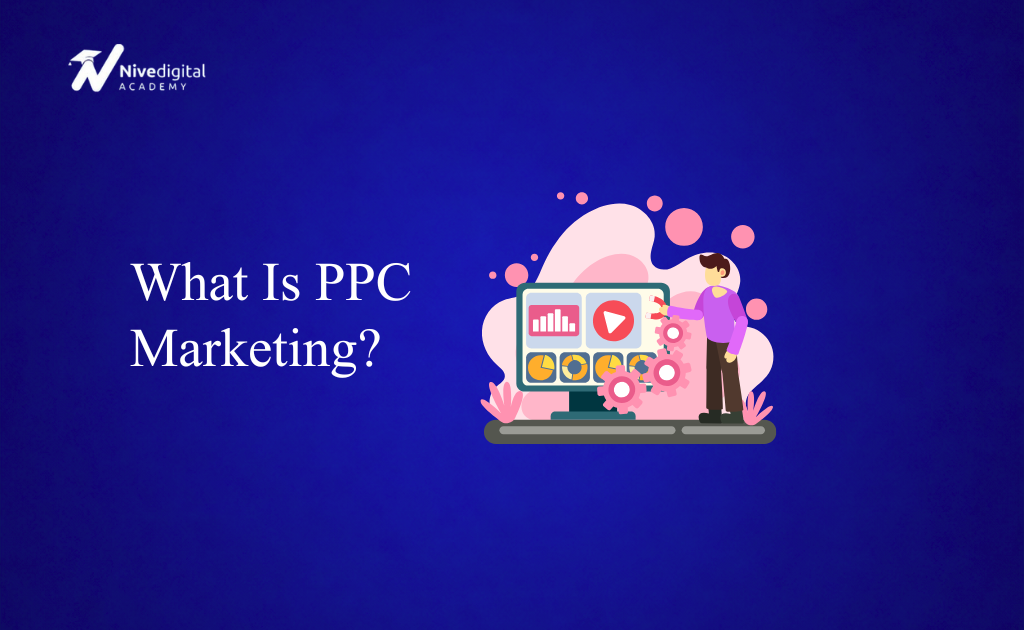
What Is PPC Marketing?
PPC stands for Pay-Per-Click. It is a digital advertising model where advertisers pay a fee each time someone clicks on their advertisement.
Instead of paying simply for displaying an ad, businesses pay only when users interact with it by clicking. This makes PPC one of the most measurable forms of online advertising.
For example, if you own a digital marketing academy and someone searches for “Digital Marketing Course in Nigeria,” your Google Ads campaign may display your advertisement at the top of the search results. If the user clicks your ad, you pay Google a small fee for that click.
The goal of PPC marketing is to attract qualified visitors who are more likely to become customers.
Businesses use PPC marketing to:
- Generate leads
- Increase sales
- Drive website traffic
- Promote products
- Build brand awareness
- Increase app downloads
- Generate phone calls
When managed properly, PPC campaigns can deliver an excellent return on investment.
How Does PPC Marketing Work?
PPC marketing follows a straightforward process.
Step 1: Create an Advertising Account
The first step is creating an account on an advertising platform such as Google Ads or Microsoft Ads.
From there, you can create campaigns based on your business goals.
Step 2: Choose Your Campaign Objective
Every PPC campaign starts with a goal.
Common objectives include:
- Website traffic
- Leads
- Sales
- Brand awareness
- App promotion
- Phone calls
Choosing the right objective helps the advertising platform optimize your campaign.
Step 3: Conduct Keyword Research
Keywords are the search terms people enter into search engines.
For example:
- SEO Training
- Buy Laptop
- Best Hotel in Abuja
- Web Design Company
Selecting relevant keywords ensures your advertisements appear before the right audience.
Step 4: Create Your Advertisement
Your advertisement typically includes:
- Headlines
- Descriptions
- Display URL
- Call-to-action
Good advertisements are relevant, persuasive, and encourage users to click.
Step 5: Set Your Budget
You decide how much you’re willing to spend.
Most PPC platforms allow advertisers to set:
- Daily budgets
- Monthly budgets
- Maximum bids
- Campaign limits
This gives businesses complete control over advertising costs.
Step 6: Google Runs an Ad Auction
Whenever someone searches for a keyword, Google runs an instant auction.
Google considers several factors, including:
- Bid amount
- Ad relevance
- Landing page quality
- Expected click-through rate
- Quality Score
The advertiser with the highest bid doesn’t always win. High-quality advertisements often achieve better positions while paying less.
Step 7: Users Click the Advertisement
When someone clicks your ad, they’re directed to your landing page or website.
If you’re using a Pay-Per-Click campaign, this is when you’re charged.
Step 8: Track Performance
One of PPC marketing’s greatest strengths is its ability to measure performance.
You can monitor:
- Clicks
- Impressions
- Conversions
- Sales
- Revenue
- Cost-per-click
- Return on investment
These insights help improve future campaigns.
Types of PPC Advertising
PPC advertising comes in several different formats.
Search Ads
Search Ads appear at the top of Google search results when users search for targeted keywords.
These ads are excellent for generating qualified leads because they target users with strong purchase intent.
Display Ads
Display Ads use images or banners that appear across millions of websites within advertising networks.
They’re commonly used for:
- Brand awareness
- Product promotion
- Remarketing
Shopping Ads
Shopping Ads display products directly within Google Search results.
They include:
- Product image
- Price
- Store name
- Product title
These campaigns are especially effective for eCommerce businesses.
Video Ads
Video Ads appear on YouTube before, during, or after videos.
Businesses use them to:
- Promote products
- Build brand awareness
- Increase website visits
- Generate leads
App Promotion Ads
App campaigns encourage users to download mobile applications.
Google automatically places these advertisements across Search, YouTube, Google Play, and the Display Network.
Remarketing Ads
Remarketing targets people who previously visited your website but didn’t complete a desired action.
Because these users already know your business, remarketing campaigns often produce higher conversion rates.
Popular PPC Advertising Platforms
Several platforms support PPC marketing.
Some of the most popular include:
- Google Ads
- Microsoft Advertising
- Meta Ads (Facebook & Instagram)
- LinkedIn Ads
- TikTok Ads
- Amazon Ads
- Pinterest Ads
Each platform serves different audiences, so choosing the right one depends on your business goals.
Benefits of PPC Marketing
PPC marketing offers many advantages over traditional advertising.
Immediate Results
Unlike SEO, PPC campaigns can begin driving traffic shortly after they’re launched.
Highly Targeted
Businesses can target audiences based on:
- Keywords
- Location
- Age
- Gender
- Interests
- Device
- Language
This helps improve campaign effectiveness.
Measurable Performance
Every click, impression, and conversion can be tracked.
Businesses know exactly how their advertising budget is being spent.
Budget Control
Advertisers control how much they spend.
Campaigns can be paused, adjusted, or scaled at any time.
Increased Sales
PPC helps businesses reach customers who are actively searching for products or services.
This often leads to higher conversion rates.
Better Brand Visibility
Even if users don’t click your advertisement, seeing your business repeatedly increases brand awareness.
PPC Marketing vs SEO
Although PPC and SEO both aim to increase website traffic, they work differently.
| PPC Marketing | SEO |
|---|---|
| Paid advertising | Organic marketing |
| Immediate results | Long-term growth |
| Pay per click | No payment per visitor |
| Stops when budget ends | Continues generating traffic |
| Best for fast results | Best for sustainable growth |
Many businesses combine PPC and SEO to maximize their online visibility.
Important PPC Metrics
Understanding key performance metrics helps marketers improve campaigns.
Cost Per Click (CPC)
The amount paid whenever someone clicks your advertisement.
Click-Through Rate (CTR)
The percentage of people who click your ad after seeing it.
A higher CTR usually indicates better advertisement relevance.
Conversion Rate
Measures the percentage of visitors who complete a desired action.
Cost Per Acquisition (CPA)
Shows how much it costs to acquire one customer.
Return on Ad Spend (ROAS)
Measures how much revenue is generated from advertising.
Higher ROAS indicates better campaign performance.
Quality Score
Google’s rating of your advertisements based on:
- Relevance
- Landing page quality
- Expected click-through rate
Higher Quality Scores often reduce advertising costs.
Common PPC Marketing Mistakes
Many beginners lose money because they make avoidable mistakes.
Examples include:
- Choosing the wrong keywords.
- Ignoring negative keywords.
- Sending traffic to poor landing pages.
- Writing weak advertisements.
- Not tracking conversions.
- Targeting the wrong audience.
- Failing to test multiple ads.
- Ignoring campaign optimization.
Regular monitoring and optimization are essential for long-term success.
Is PPC Marketing Worth Learning in 2026?
Yes.
PPC marketing remains one of the most valuable digital marketing skills because businesses want measurable results.
Companies actively hire professionals who can:
- Generate qualified leads
- Increase online sales
- Improve advertising performance
- Reduce marketing costs
- Optimize campaigns
Whether you’re interested in freelancing, agency work, entrepreneurship, or corporate marketing, PPC skills are highly transferable and continue to be in demand.
Learn PPC Marketing at Nivedigital Academy
Mastering PPC marketing requires more than simply creating advertisements. You need to understand keyword research, audience targeting, bidding strategies, landing page optimization, conversion tracking, campaign analysis, and continuous optimization.
At Nivedigital Academy, our practical Digital Marketing training teaches students how to build profitable PPC campaigns using Google Ads, Meta Ads, and other leading advertising platforms. Students learn Search Ads, Display Ads, YouTube Ads, remarketing campaigns, keyword research, Quality Score optimization, Google Analytics, conversion tracking, and AI-powered advertising strategies.
Our hands-on approach ensures students gain practical experience by working on real-world projects rather than relying solely on theory. Whether you’re looking to become a digital marketer, freelancer, business owner, or PPC specialist, our training equips you with the skills needed to create high-performing advertising campaigns that generate measurable business results.
Frequently Asked Questions (FAQs)
What is PPC marketing?
PPC (Pay-Per-Click) marketing is a digital advertising model where advertisers pay each time someone clicks on their advertisement.
Is Google Ads the same as PPC?
Google Ads is one of the most popular PPC advertising platforms, but PPC advertising also includes platforms such as Microsoft Ads, Meta Ads, LinkedIn Ads, TikTok Ads, and Amazon Ads.
How much does PPC marketing cost?
There is no fixed cost. Businesses set their own advertising budgets, and costs vary depending on keywords, competition, and campaign objectives.
Is PPC better than SEO?
PPC provides immediate traffic through paid advertising, while SEO focuses on long-term organic growth. Many businesses use both strategies together.
Can beginners learn PPC marketing?
Yes. With practical training and consistent practice, beginners can learn how to create, manage, and optimize successful PPC campaigns.
Is PPC marketing a good career?
Absolutely. PPC specialists are in high demand because businesses rely on paid advertising to generate leads, sales, and measurable business growth.
Conclusion
PPC marketing is one of the fastest ways to reach potential customers and generate measurable business results online. By paying only when users click on your advertisements, businesses gain greater control over their marketing budgets while reaching highly targeted audiences through platforms like Google Ads, Microsoft Advertising, and Meta Ads.
Success in PPC marketing goes beyond simply launching campaigns. It requires understanding your audience, selecting the right keywords, writing compelling ad copy, optimizing landing pages, tracking conversions, and continuously improving campaign performance. As AI continues to transform digital advertising, marketers who combine data-driven decision-making with strategic thinking will remain highly valuable.
Whether you’re a beginner looking to build a career in digital marketing or a business owner aiming to increase leads and sales, learning PPC marketing is a worthwhile investment that can deliver immediate and long-term value in 2026 and beyond.