Search Engine Optimization (SEO) is one of the most effective digital marketing strategies for generating consistent, long-term traffic, leads, and sales. However, simply implementing SEO isn’t enough, you also need to measure whether your efforts are delivering results. That’s where SEO KPIs come in.
NiveDigital Academy is a leading digital marketing training institute in Nigeria. Learn practical digital marketing skills, master SEO, social media marketing, Google Ads, content marketing, and more — and build the skills you need to grow a business, get clients, or start a career in digital marketing.
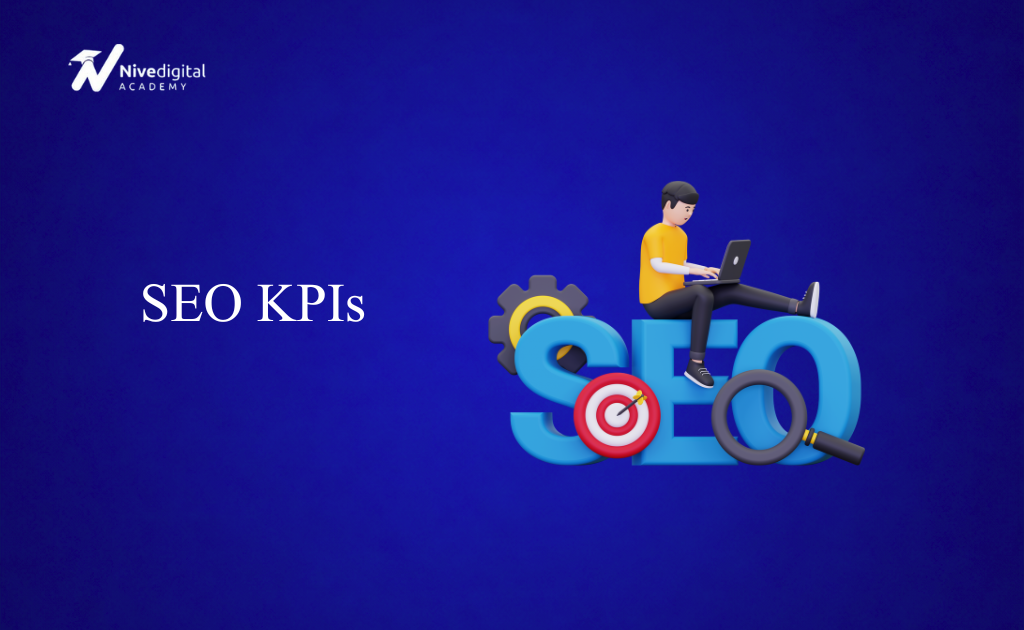
SEO KPIs (Key Performance Indicators) are measurable metrics that help you evaluate the performance of your SEO strategy. They show what’s working, what’s not, and where improvements are needed. Whether you’re a business owner, SEO specialist, marketing manager, freelancer, or agency, tracking the right SEO KPIs enables you to make data-driven decisions instead of relying on guesswork.
Many beginners focus only on keyword rankings, but successful SEO campaigns measure much more than that. Organic traffic, conversions, backlinks, click-through rates, page speed, and user engagement all play important roles in determining SEO success.
In this guide, you’ll learn the most important SEO KPIs you should track, why they matter, and how to use them to improve your website’s search performance.
If you’re looking to master SEO through hands-on projects rather than theory alone, Nivedigital Academy offers practical SEO training where students work with real websites, learn modern AI-powered SEO workflows, and gain skills that employers and clients actually need.
What Are SEO KPIs?
SEO KPIs (Key Performance Indicators) are measurable values used to determine how well your SEO strategy is performing.

These metrics help answer important questions such as:
- Is my website getting more visitors from Google?
- Are my rankings improving?
- Am I generating more leads or sales?
- Is my content attracting the right audience?
- Is my website technically healthy?
Tracking SEO KPIs regularly allows you to identify opportunities, fix problems quickly, and continually improve your search visibility.
Why SEO KPIs Matter
Without KPIs, it’s difficult to know whether your SEO investment is producing results. Rankings can fluctuate daily, algorithms change regularly, and competitors constantly improve their websites.
Monitoring the right KPIs helps you:
- Measure SEO success
- Identify technical problems
- Improve website performance
- Increase organic traffic
- Generate more qualified leads
- Improve conversion rates
- Justify SEO investment
- Make smarter marketing decisions
20 Essential SEO KPIs to Track
1. Organic Traffic
Organic traffic refers to visitors who find your website through unpaid search engine results.
This is one of the most important SEO KPIs because increasing qualified organic traffic is often the primary goal of SEO.
Tools to track:

- Google Analytics
- Google Search Console
2. Keyword Rankings
Keyword rankings show where your website appears on Google for specific search terms.
Instead of focusing on a single keyword, monitor a portfolio of relevant keywords across different pages.
3. Organic Click-Through Rate (CTR)
CTR measures the percentage of people who click on your website after seeing it in Google’s search results.
Formula:
CTR = (Clicks ÷ Impressions) × 100
Improving titles and meta descriptions can significantly increase CTR.
4. Impressions
Impressions represent the number of times your pages appear in Google Search results.
A growing number of impressions often indicates increasing visibility.
5. Organic Conversions
Traffic alone doesn’t pay the bills.
Track how many visitors complete valuable actions such as:
- Purchasing a product
- Filling out a contact form
- Booking a consultation
- Downloading an ebook
- Registering for a webinar
- Calling your business
6. Conversion Rate
This KPI measures how many visitors become leads or customers.
Formula:
Conversion Rate = (Conversions ÷ Visitors) × 100
High traffic with low conversions often signals problems with your website or landing pages.
7. Bounce Rate
Bounce rate measures the percentage of visitors who leave without interacting further.
A high bounce rate may indicate:
- Poor user experience
- Slow loading pages
- Irrelevant content
- Weak search intent matching
8. Average Session Duration
This shows how long visitors spend on your website.
Longer sessions generally indicate engaging, valuable content.
9. Pages Per Session
This measures how many pages users visit during one session.
Higher numbers often indicate strong internal linking and useful content.
10. Backlinks
Backlinks remain one of Google’s strongest ranking signals.
Track:
- Number of backlinks
- Referring domains
- Link quality
- Lost backlinks
- New backlinks
Quality matters much more than quantity.
11. Referring Domains
Instead of counting individual backlinks, monitor how many unique websites link to you.
Growing referring domains often leads to stronger authority.
12. Domain Authority (DA)
Although Domain Authority isn’t a Google ranking factor, it helps estimate your website’s overall strength compared to competitors.
Use it as a comparative metric—not an absolute ranking signal.
13. Page Authority
Page Authority estimates the ranking strength of an individual webpage.
Important pages should steadily improve over time.
14. Indexed Pages
Monitor how many pages Google has indexed.
If valuable pages aren’t indexed, they can’t rank.
Google Search Console helps identify indexing issues.
15. Core Web Vitals
Google measures user experience through three Core Web Vitals metrics:
- Largest Contentful Paint (LCP)
- Interaction to Next Paint (INP)
- Cumulative Layout Shift (CLS)
Good scores improve user experience and can support SEO performance.
16. Page Speed
Fast-loading websites improve:
- User satisfaction
- Engagement
- Conversions
- Search performance
Slow websites often lose visitors before pages fully load.
17. Mobile Usability
Since Google uses mobile-first indexing, your website must perform well on smartphones.
Monitor:
- Mobile friendliness
- Responsive design
- Touch usability
- Mobile page speed
18. Crawl Errors
Search engines need to crawl your website efficiently.
Track issues such as:
- 404 errors
- Broken links
- Redirect loops
- Server errors
- Blocked pages
Fixing crawl issues helps search engines understand your site.
19. Organic Revenue
For ecommerce businesses, organic revenue is one of the most valuable SEO KPIs.
Measure:
- Revenue from Google Search
- Average order value
- Transactions
- Revenue growth
Ultimately, SEO should contribute to business growth—not just traffic.
20. Return on SEO Investment (SEO ROI)
SEO is an investment.
Calculate whether your SEO activities generate more revenue than they cost.
A positive SEO ROI demonstrates the long-term value of your optimization efforts.
Best Tools for Tracking SEO KPIs
Several tools help monitor SEO performance accurately.
Google Analytics 4
Tracks:
- Traffic
- Users
- Engagement
- Conversions
- Revenue
Google Search Console
Tracks:
- Clicks
- Impressions
- CTR
- Rankings
- Index coverage
- Technical issues
Ahrefs
Useful for:
- Backlinks
- Keyword rankings
- Competitor research
- Site audits
SEMrush
Provides:
- Position tracking
- Keyword research
- Backlink analysis
- Technical SEO audits
Screaming Frog
Excellent for:
- Website crawling
- Broken links
- Duplicate content
- Technical SEO issues
Which SEO KPIs Matter Most?
Not every KPI carries the same weight. The most valuable metrics depend on your goals.
If your goal is increasing website visibility, prioritize:
- Organic traffic
- Keyword rankings
- Impressions
- CTR
If your goal is generating leads:
- Organic conversions
- Conversion rate
- Cost per acquisition
- Lead quality
If your goal is ecommerce growth:
- Organic revenue
- Transactions
- Average order value
- SEO ROI
If your goal is improving website quality:
- Core Web Vitals
- Page speed
- Crawl errors
- Mobile usability
Common SEO KPI Mistakes
Many businesses measure the wrong metrics.
Avoid these common mistakes:
- Tracking rankings for only one keyword
- Ignoring conversions
- Focusing only on traffic volume
- Buying low-quality backlinks
- Ignoring technical SEO metrics
- Not setting measurable goals
- Failing to review KPIs regularly
- Comparing data over very short time periods
SEO is a long-term strategy, so trends over months are usually more meaningful than daily fluctuations.
How Often Should You Track SEO KPIs?
Different KPIs should be reviewed at different intervals.
Weekly:
- Rankings
- Organic traffic
- Technical issues
Monthly:
- Conversions
- Backlinks
- CTR
- Organic growth
- Revenue
Quarterly:
- SEO ROI
- Competitor analysis
- Content performance
- Overall SEO strategy
Consistent monitoring helps you spot opportunities and address problems before they impact performance.
At Nivedigital Academy, students learn not only how to optimize websites but also how to measure SEO success using industry-standard tools like Google Analytics, Google Search Console, Ahrefs, and SEMrush. The academy focuses on practical training, allowing students to work with real websites, interpret SEO reports, and make data-driven decisions that improve rankings, traffic, and conversions.
Frequently Asked Questions (FAQs)
What are SEO KPIs?
SEO KPIs are measurable metrics used to evaluate the success of an SEO campaign. They help track traffic, rankings, conversions, backlinks, and overall search performance.
What is the most important SEO KPI?
There isn’t a single KPI that fits every business. However, organic traffic, organic conversions, keyword rankings, and SEO ROI are among the most important metrics for measuring success.
Which tool is best for tracking SEO KPIs?
Google Search Console and Google Analytics are essential free tools. For more advanced analysis, platforms like Ahrefs, SEMrush, and Screaming Frog are widely used by SEO professionals.
How often should SEO KPIs be monitored?
Most businesses should review rankings and traffic weekly, while conversions, backlinks, and revenue are best analyzed monthly. A broader SEO performance review is typically done quarterly.
Can keyword rankings alone measure SEO success?
No. High rankings are valuable, but they don’t guarantee business results. Successful SEO should also increase qualified traffic, leads, sales, and revenue.
Why are conversions more important than traffic?
Traffic is only valuable if it helps achieve business goals. A website with fewer visitors but a high conversion rate can generate more revenue than a site with large amounts of untargeted traffic.
Where can I learn practical SEO in Nigeria?
If you’re looking for hands-on SEO training in Nigeria, Nivedigital Academy teaches keyword research, on-page SEO, technical SEO, link building, AI-powered SEO, analytics, and SEO reporting through practical projects designed to prepare students for real-world work.
Conclusion
Tracking the right SEO KPIs is essential for understanding whether your optimization efforts are delivering meaningful results. While rankings and traffic are important indicators, the most successful SEO strategies focus on metrics that contribute to business growth, including conversions, revenue, user experience, and return on investment.
By consistently monitoring KPIs such as organic traffic, click-through rate, keyword rankings, backlinks, Core Web Vitals, and SEO ROI, you can identify opportunities, solve performance issues, and make informed decisions that improve your website over time. Remember that SEO is an ongoing process, and regular measurement is the key to long-term success.
If you want to learn how to optimize websites and confidently track SEO performance using professional tools, Nivedigital Academy provides practical SEO training with real projects, expert guidance, and hands-on experience to help you build in-demand skills and achieve measurable results.