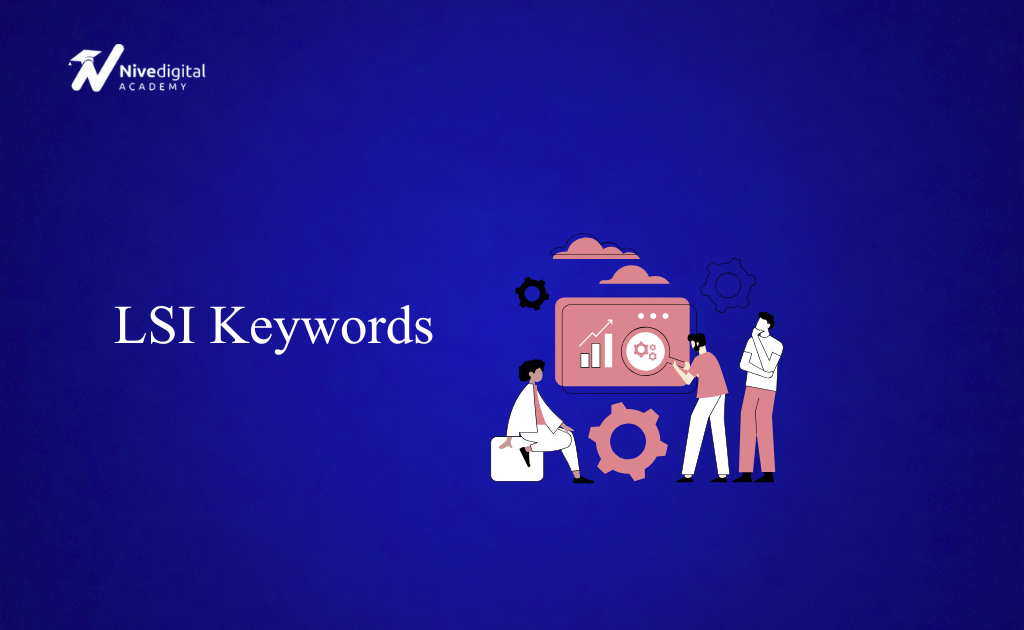
If you’ve been learning SEO, you’ve probably come across the term LSI keywords. Many blogs, YouTube videos, and SEO courses claim that adding LSI keywords to your content can help you rank higher on Google. But is that actually true?
NiveDigital Academy is a leading digital marketing training institute in Nigeria. Learn practical digital marketing skills, master SEO, social media marketing, Google Ads, content marketing, and more — and build the skills you need to grow a business, get clients, or start a career in digital marketing.
The short answer is: not exactly.
While using related keywords throughout your content is an excellent SEO practice, the idea that Google specifically uses “LSI keywords” as a ranking factor is a common misconception. Google’s search algorithms have evolved significantly over the years and now rely on advanced technologies like natural language processing (NLP), semantic search, and machine learning to understand the meaning behind content.
Understanding what LSI keywords are—and what they are not—can help you create better content and avoid outdated SEO advice.
If you’re looking to learn modern SEO strategies that actually work, Nivedigital Academy provides hands-on SEO and digital marketing training where students learn practical optimization techniques, AI-powered SEO workflows, keyword research, content marketing, and technical SEO through real-world projects. Rather than teaching outdated tactics, the academy focuses on the SEO practices businesses use today.
In this guide, you’ll learn what LSI keywords are, whether they still matter, how Google understands content today, and how to optimize your articles using related keywords the right way.
What Are LSI Keywords?
LSI stands for Latent Semantic Indexing.
Latent Semantic Indexing is a mathematical technique developed in the late 1980s to analyze relationships between words and concepts in large collections of text. The purpose of LSI was to identify related terms based on how frequently they appeared together in documents.
For example, if an article mentions:
- Apple
- iPhone
- iOS
- MacBook
- Tim Cook
An LSI system could determine that the article is about Apple Inc. rather than the fruit.
Similarly, if a page contains words like:
- Goal
- Stadium
- FIFA
- Premier League
- Football
The system understands the content relates to soccer rather than a random use of the word “goal.”
In theory, LSI helps computers understand context instead of matching only exact keywords.

However, there’s an important fact many people overlook.
Does Google Use LSI Keywords?
The simple answer is no.
Despite the popularity of the term “LSI keywords,” Google has repeatedly indicated that it does not use Latent Semantic Indexing as part of its search algorithm.
Instead, Google uses far more advanced technologies, including:
- Natural Language Processing (NLP)
- Semantic Search
- RankBrain
- BERT
- MUM
- Knowledge Graph
- Machine Learning
These technologies help Google understand:
- Search intent
- Context
- Entity relationships
- Topic relevance
- User behavior
This means Google doesn’t need traditional LSI algorithms to understand what a page is about.
That’s why many SEO professionals now avoid using the phrase “LSI keywords” and instead talk about related keywords, semantic keywords, or topically relevant terms.
Why Do People Still Talk About LSI Keywords?
The term became extremely popular because early SEO blogs simplified the concept.
Many marketers noticed that top-ranking pages naturally contained related words and assumed those related terms were “LSI keywords.”
For example, an article about “digital marketing” might also mention:
- SEO
- Google Ads
- Email marketing
- Social media
- PPC
- Content marketing
These related terms help Google understand the overall topic.
The mistake was assuming that Google specifically relied on LSI technology.
In reality, Google simply became better at understanding language.
Today, when SEO experts recommend using “LSI keywords,” they usually mean related words and phrases that help cover a topic comprehensively.
Why Related Keywords Still Matter
Although Google doesn’t use traditional LSI, related keywords remain extremely important.
Imagine writing an article about “SEO.”
If your article only repeats the word “SEO” hundreds of times, it won’t be very useful.
A comprehensive article naturally includes related concepts such as:
- Keyword research
- On-page SEO
- Technical SEO
- Link building
- Search intent
- Meta descriptions
- Internal linking
- Google Search Console
- Backlinks
- Core Web Vitals
These related terms demonstrate that your content covers the subject in depth.
This is one reason comprehensive articles often outperform shorter, keyword-focused content.
LSI Keywords vs Related Keywords
Many beginners confuse these two concepts.
| LSI Keywords | Related Keywords |
|---|---|
| Based on Latent Semantic Indexing | Based on topic relevance |
| Old information retrieval method | Modern SEO concept |
| Not used by Google | Used naturally in quality content |
| Mathematical relationship | Semantic relationship |
For practical SEO, it’s more accurate to think about related keywords rather than LSI keywords.
Examples of Related Keywords
Let’s look at a few examples.
Primary Keyword: SEO
Related terms include:
- Search Engine Optimization
- Keyword research
- Technical SEO
- On-page SEO
- Off-page SEO
- Google Search Console
- Organic traffic
- Backlinks
- Core Web Vitals
- Search rankings
Primary Keyword: Email Marketing
Related terms include:
- Email campaigns
- Newsletter
- Automation
- Open rate
- Click-through rate
- Subscriber list
- Lead nurturing
- Segmentation
- Conversion rate
- Email software
Primary Keyword: Google Ads
Related terms include:
- PPC
- Quality Score
- CPC
- CTR
- Ad groups
- Campaigns
- Conversion tracking
- Search ads
- Display ads
- Landing pages
Notice how these words naturally belong together.
Using them helps create more complete content.
How to Find Related Keywords
Finding related keywords is easier than many beginners think.
1. Google Autocomplete
Start typing your keyword into Google.
The autocomplete suggestions often reveal related searches.
2. People Also Ask
Google’s “People Also Ask” section contains questions closely related to your topic.
Answering these questions helps improve topical coverage.
3. Related Searches
Scroll to the bottom of Google’s search results.
You’ll find additional search queries connected to your main keyword.
4. Google Search Console
Search Console shows the actual queries people use to find your website.
These often reveal related keyword opportunities.
5. SEO Tools
Professional tools such as:
- Ahrefs
- SEMrush
- Ubersuggest
- Keywords Everywhere
can generate hundreds of related keyword ideas.
Best Practices for Using Related Keywords
Instead of forcing keywords into every paragraph, focus on writing naturally.
Here are some best practices:
- Cover the topic comprehensively.
- Answer common user questions.
- Use synonyms naturally.
- Include related concepts.
- Write for humans first.
- Avoid keyword stuffing.
- Match search intent.
- Structure content with clear headings.
Google rewards content that demonstrates expertise and thoroughly answers user queries.
Common Mistakes to Avoid
Many beginners still make mistakes when trying to optimize content.
Avoid these practices:
- Stuffing dozens of related keywords into one paragraph.
- Believing LSI keywords are a Google ranking factor.
- Ignoring search intent.
- Repeating the same keyword excessively.
- Creating content solely for search engines instead of users.
Remember, your goal is to provide the best possible answer—not simply insert as many keywords as possible.
Modern SEO Is About Topics, Not Individual Keywords
Google has become remarkably good at understanding topics instead of focusing on exact keyword matches.
This means your goal should be to build topical authority.
For example, instead of writing one article about SEO, create multiple related articles covering:
- What Is SEO?
- On-Page SEO
- Technical SEO
- Local SEO
- Keyword Research
- Link Building
- SEO KPIs
- SEO Audit
- SEO Tools
- SEO Ranking Factors
By connecting these articles with internal links, you help Google understand that your website is an authority on SEO.
At Nivedigital Academy, students learn modern SEO strategies that go beyond outdated concepts like keyword stuffing or chasing “LSI keywords.” Through practical projects, they learn how to perform keyword research, build topical authority, optimize content using semantic SEO principles, and create content that aligns with how modern search engines understand language.
Frequently Asked Questions
What does LSI stand for in SEO?
LSI stands for Latent Semantic Indexing, a mathematical method developed to identify relationships between words in large collections of text.
Does Google use LSI keywords?
No. Google has stated that it does not use Latent Semantic Indexing as part of its ranking algorithm. Instead, it relies on advanced technologies such as natural language processing, semantic search, and machine learning.
Should I still use LSI keywords?
Rather than focusing on so-called LSI keywords, focus on using relevant terms, synonyms, and related concepts naturally throughout your content. This helps search engines understand your topic more effectively.
How do I find related keywords?
You can use Google Autocomplete, People Also Ask, Related Searches, Google Search Console, Ahrefs, SEMrush, Ubersuggest, and other keyword research tools to discover related search terms.
Are LSI keywords the same as semantic keywords?
Not exactly. Although many people use the terms interchangeably, semantic keywords refer to words and phrases related to your topic, while LSI refers to an older indexing technique that Google does not use.
Why are related keywords important for SEO?
Related keywords help search engines understand the context of your content, improve topical relevance, and ensure your article covers a subject comprehensively.
Where can I learn modern SEO in Nigeria?
If you want to learn practical, up-to-date SEO strategies, Nivedigital Academy offers hands-on training covering keyword research, semantic SEO, technical SEO, AI-powered SEO, content optimization, analytics, and much more through real-world projects.
Conclusion
The term LSI keywords has been part of SEO discussions for many years, but it’s important to understand that Google’s search engine has evolved far beyond traditional Latent Semantic Indexing. While Google doesn’t use LSI technology, it does reward content that demonstrates topical relevance, satisfies search intent, and naturally includes related concepts.
Instead of trying to find “LSI keywords,” focus on creating comprehensive content that answers users’ questions, incorporates relevant terminology, and covers your topic from multiple angles. This approach aligns with modern SEO best practices and provides greater value to both readers and search engines.
As search algorithms continue to evolve, successful SEO is becoming less about individual keywords and more about understanding topics, entities, and user intent. If you’re ready to master these modern SEO techniques, Nivedigital Academy provides practical, project-based training that equips students with the skills needed to succeed in today’s competitive digital marketing landscape.