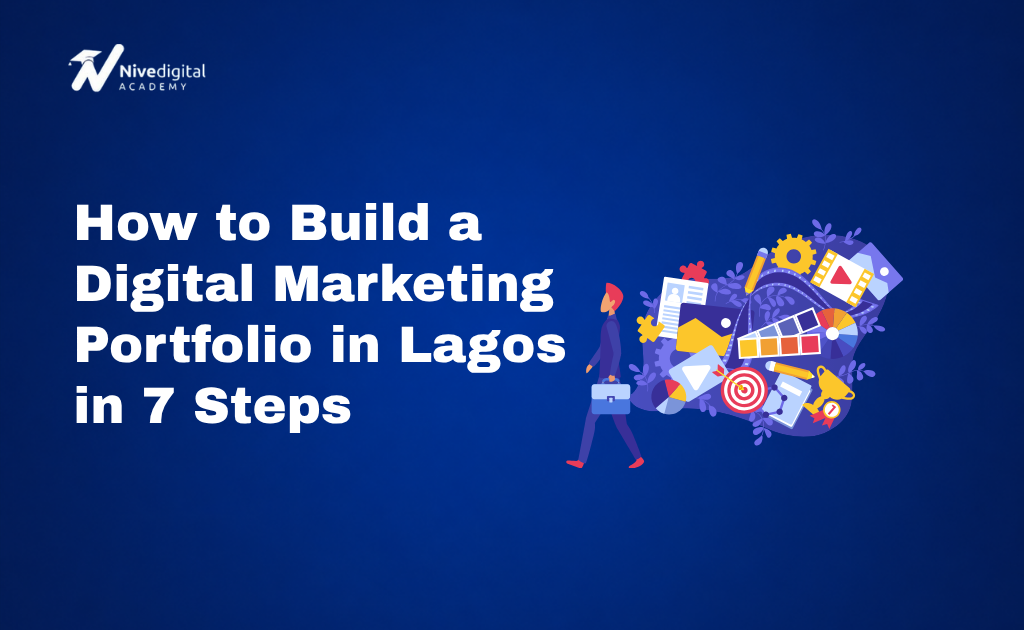
A strong digital marketing portfolio can help you stand out in a competitive job market, attract clients, and demonstrate your skills to potential employers. Whether you are a student, freelancer, entrepreneur, or aspiring digital marketer in Lagos, having a portfolio is often more valuable than simply listing certifications on your CV.
NiveDigital Academy is a leading digital marketing training institute in Nigeria. Learn practical digital marketing skills, master SEO, social media marketing, Google Ads, content marketing, and more — and build the skills you need to grow a business, get clients, or start a career in digital marketing.
Many employers and clients want to see proof of what you can do rather than just what you know. A digital marketing portfolio showcases your practical experience, achievements, and ability to deliver results.
Here are seven practical steps to build a professional digital marketing portfolio in Lagos.
Step 1: Learn the Fundamentals of Digital Marketing
Before building a portfolio, you need a solid understanding of digital marketing. Learn key areas such as:
- Search Engine Optimization (SEO)
- Social Media Marketing
- Content Marketing
- Google Ads
- Email Marketing
- Analytics and Reporting
- Conversion Optimization
Enrolling in a practical digital marketing training program can help you gain hands-on experience and understand how digital marketing works in real-world scenarios.
Step 2: Create Your Personal Brand
Your personal brand serves as your first marketing project. Create professional profiles on platforms such as LinkedIn and other relevant social media channels.
Develop a consistent online presence by:
- Using a professional profile photo
- Writing a strong bio
- Sharing industry insights
- Posting marketing-related content
- Engaging with professionals in your field
A strong personal brand can increase your visibility and credibility.
Step 3: Build Your Own Website or Blog
One of the best ways to showcase your digital marketing skills is by creating your own website.
Your website can include:
- About Me section
- Services page
- Blog articles
- Portfolio projects
- Testimonials
- Contact information
A personal website demonstrates your understanding of content marketing, SEO, user experience, and website management.
Step 4: Work on Personal Projects
You do not need paid clients to start building a portfolio.
Create your own projects such as:

- Ranking a blog on Google
- Growing a social media page
- Running a small advertising campaign
- Creating email marketing campaigns
- Writing SEO-optimized content
Document your process and results. Employers often value initiative and practical experience.
Step 5: Volunteer or Offer Free Services
If you are just starting out, consider helping small businesses, NGOs, religious organizations, startups, or local entrepreneurs.
You can assist with:
- Social media management
- SEO improvements
- Website optimization
- Content creation
- Digital advertising
The goal is to gain experience and collect measurable results that can be included in your portfolio.
Step 6: Document Results and Case Studies
A portfolio should focus on outcomes, not just activities.
For every project, document:
- The objective
- The strategy used
- The tools implemented
- Challenges encountered
- Results achieved
Examples include:
- Increased website traffic by 150%
- Generated 300 leads in 60 days
- Improved search rankings for target keywords
- Increased social media engagement
Case studies make your portfolio more convincing and professional.
Step 7: Organize and Present Your Portfolio Professionally
Once you have completed several projects, organize them into a clear and professional portfolio.
Include:
- Project title
- Client or business name
- Project goals
- Strategy implemented
- Screenshots and visuals
- Results achieved
You can present your portfolio through:
- A personal website
- Google Drive
- PDF portfolio
- LinkedIn profile
Make it easy for potential employers or clients to review your work.
Common Mistakes to Avoid
Many beginners make mistakes that reduce the effectiveness of their portfolios. Avoid:
- Including too many unrelated projects
- Making unverified claims
- Focusing on tasks instead of results
- Using poor-quality screenshots
- Failing to explain your role in a project
- Neglecting to update your portfolio regularly
A well-organized portfolio should highlight quality over quantity.
Why a Portfolio Matters
A strong portfolio can help you:
- Get digital marketing jobs faster
- Win freelance clients
- Build credibility
- Demonstrate practical skills
- Differentiate yourself from other applicants
- Increase earning opportunities
In many cases, employers are more interested in proven results than certifications alone.
Conclusion
Building a digital marketing portfolio in Lagos does not require years of experience. By learning the fundamentals, creating personal projects, helping businesses, documenting results, and presenting your work professionally, you can create a portfolio that attracts employers and clients.
The earlier you start building your portfolio, the faster you can establish yourself as a credible digital marketing professional and unlock new career opportunities in Nigeria’s growing digital economy.