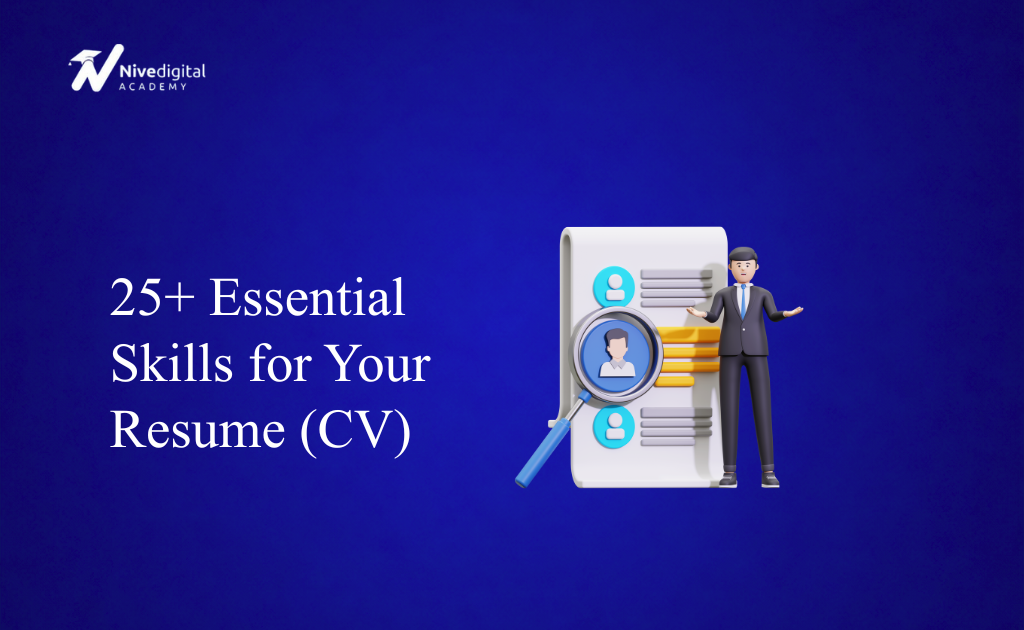
Your resume (CV) is often the first impression you make on an employer. While your education and work experience matter, the skills section of your CV can make the difference between getting shortlisted for an interview or being overlooked.
NiveDigital Academy is a leading digital marketing training institute in Nigeria. Learn practical digital marketing skills, master SEO, social media marketing, Google Ads, content marketing, and more — and build the skills you need to grow a business, get clients, or start a career in digital marketing.
Recruiters and hiring managers want candidates who have the right combination of technical expertise and workplace skills. Including relevant, in-demand skills on your resume shows that you’re capable of performing the job effectively.
In this guide, you’ll learn the most essential skills to include on your resume in 2026, how to choose the right ones, and tips for making your CV stand out.
Why Are Skills Important on a Resume?
The skills section helps employers quickly understand what you can do.
Adding relevant skills to your CV can help you:
- Pass Applicant Tracking Systems (ATS)
- Match job descriptions
- Demonstrate your qualifications
- Highlight your strengths
- Increase your interview opportunities
- Stand out from other applicants
The best resumes include a balance of hard skills and soft skills.
Hard Skills vs Soft Skills
Before adding skills to your CV, it’s important to understand the difference.
Hard Skills
Hard skills are technical abilities that can be learned through education, training, or experience.
Examples include:
- Microsoft Excel
- Search Engine Optimization (SEO)
- Graphic Design
- Data Analysis
- Programming
- Google Ads
- Video Editing
Soft Skills
Soft skills relate to how you work and interact with others.
Examples include:
- Communication
- Leadership
- Teamwork
- Time Management
- Problem Solving
- Creativity
- Adaptability
Most employers look for candidates who possess both.
25+ Essential Skills for Your Resume (CV)
1. Communication Skills
Good communication is one of the most requested skills by employers.

This includes:
- Verbal communication
- Written communication
- Active listening
- Presentation skills
2. Teamwork
Almost every job requires collaboration.
Employers value candidates who can:
- Work with others
- Share ideas
- Resolve conflicts
- Support team goals
3. Problem-Solving
Companies hire people who can identify problems and develop effective solutions.
Problem-solving demonstrates initiative and critical thinking.
4. Time Management
Managing deadlines is essential in every profession.
Good time management includes:
- Prioritizing tasks
- Meeting deadlines
- Planning workloads
- Staying organized
5. Leadership
Leadership isn’t only for managers.
Employers value candidates who can:
- Take responsibility
- Motivate others
- Make decisions
- Lead projects
6. Adaptability
Workplaces change quickly.
Adaptable employees learn new technologies, processes, and responsibilities with ease.
7. Critical Thinking
Critical thinking involves analyzing information before making decisions.
This skill helps improve productivity and problem-solving.
8. Computer Skills
Basic computer literacy is expected in most jobs.
Examples include:
- Microsoft Word
- Excel
- PowerPoint
- Google Docs
- Google Sheets
9. Digital Marketing
Digital marketing has become one of the most valuable professional skills.
Examples include:
- SEO
- Google Ads
- Email Marketing
- Social Media Marketing
- Content Marketing
10. Search Engine Optimization (SEO)
SEO is highly sought after because businesses rely on search engines for customer acquisition.
SEO skills include:
- Keyword Research
- Technical SEO
- On-Page SEO
- Link Building
- Local SEO
11. Data Analysis
Employers increasingly value people who can interpret data.
Useful tools include:
- Excel
- Power BI
- Google Analytics
- SQL
12. Customer Service
Customer-facing roles require excellent service skills.
Important qualities include:
- Patience
- Professionalism
- Empathy
- Communication
13. Project Management
Project management involves planning, organizing, and delivering projects successfully.
Knowledge of tools like Trello, Asana, or Monday.com is an advantage.
14. Graphic Design
Design skills are useful across many industries.
Popular tools include:
- Canva
- Adobe Photoshop
- Adobe Illustrator
- Figma
15. Video Editing
Video content continues to grow.
Popular editing tools include:
- CapCut
- Adobe Premiere Pro
- Final Cut Pro
- DaVinci Resolve
16. Copywriting
Strong writing skills help businesses attract customers and improve marketing performance.
Copywriting is valuable for marketing, sales, and communications roles.
17. Artificial Intelligence (AI)
AI literacy is becoming a competitive advantage.
Useful AI skills include:
- Prompt writing
- AI research
- AI content creation
- AI productivity tools
18. Social Media Marketing
Businesses need professionals who can:
- Create content
- Manage business pages
- Run social media ads
- Build online communities
19. Sales Skills
Sales skills remain valuable across almost every industry.
Examples include:
- Negotiation
- Lead generation
- Closing sales
- Relationship building
20. Emotional Intelligence
Emotional intelligence helps employees communicate effectively and manage workplace relationships.
21. Research Skills
Research helps employees make informed decisions and solve business problems.
22. Organizational Skills
Being organized improves efficiency and reduces mistakes.
23. Attention to Detail
Attention to detail helps improve quality, accuracy, and customer satisfaction.
24. Creativity
Creative employees develop innovative ideas and solve problems in unique ways.
25. Decision-Making
Employers appreciate professionals who can make confident, informed decisions.
26. Multitasking
Many roles require handling multiple responsibilities without sacrificing quality.
27. Presentation Skills
Presentation skills are useful for meetings, sales pitches, training sessions, and client interactions.
Best Technical Skills for Your Resume
Some of the most in-demand technical skills include:
- Search Engine Optimization (SEO)
- Google Ads
- Microsoft Excel
- Data Analysis
- Python
- HTML
- CSS
- JavaScript
- SQL
- Power BI
- Graphic Design
- Video Editing
- AI Tools
- Cloud Computing
- Cybersecurity
Choose the technical skills that match the role you’re applying for.
Best Soft Skills for Your Resume
Highly valued soft skills include:
- Communication
- Leadership
- Teamwork
- Adaptability
- Creativity
- Time Management
- Problem-Solving
- Critical Thinking
- Emotional Intelligence
- Organization
- Work Ethic
- Flexibility
Soft skills help employers understand how you’ll fit into their workplace culture.
How to Choose the Right Skills for Your Resume
Not every skill belongs on every CV.
Follow these tips:
- Read the job description carefully.
- Match your skills to the employer’s requirements.
- Include skills you genuinely possess.
- Prioritize job-relevant skills.
- Use keywords from the vacancy where appropriate.
- Keep your skills section updated.
A targeted CV is often more effective than a generic one.
Common Resume Skills Mistakes
Avoid these common errors:
- Listing too many irrelevant skills.
- Exaggerating your abilities.
- Using outdated skills.
- Including skills without evidence.
- Copying skills from other resumes.
- Forgetting to customize your CV for each application.
Your resume should accurately reflect your abilities.
Frequently Asked Questions (FAQs)
What skills should I put on my resume?
Include skills that are relevant to the job you’re applying for. Common examples include communication, teamwork, problem-solving, computer skills, time management, leadership, and technical skills related to your profession.
What are hard skills?
Hard skills are teachable, technical abilities such as SEO, graphic design, programming, Microsoft Excel, data analysis, and Google Ads.
What are soft skills?
Soft skills are personal qualities that help you work effectively with others. Examples include communication, leadership, adaptability, teamwork, and emotional intelligence.
How many skills should a resume include?
Most resumes include between 8 and 15 relevant skills. Focus on quality rather than quantity and tailor them to the specific job.
Should I customize my resume skills for every job?
Yes. Tailoring your skills section to match each job description increases your chances of passing Applicant Tracking Systems (ATS) and attracting recruiters.
Which skills are most in demand in 2026?
Some of the most in-demand skills include AI literacy, digital marketing, SEO, data analysis, cybersecurity, cloud computing, communication, leadership, and project management.
Which skills are most valuable in Nigeria?
Employers in Nigeria increasingly value digital skills such as SEO, social media marketing, Google Ads, data analysis, graphic design, AI tools, and strong communication skills, alongside traditional workplace competencies.
Where can I learn professional skills in Nigeria?
If you’re looking to build job-ready skills, Nivedigital Academy offers practical training in digital marketing, SEO, Google Ads, social media marketing, AI tools, content marketing, and other high-demand skills that help professionals stand out in the job market in Nigeria.
Conclusion
A well-written resume does more than list your qualifications—it highlights the skills that make you the right candidate for the job. By combining relevant hard skills with strong soft skills, you can create a CV that captures the attention of recruiters and improves your chances of landing interviews.
As the job market continues to evolve, employers are placing greater value on digital skills, adaptability, and continuous learning. Whether you’re a recent graduate, career changer, or experienced professional in Nigeria, updating your resume with the right skills can open the door to exciting career opportunities.
If you’re ready to develop in-demand, career-focused skills, Nivedigital Academy provides practical training designed to help you build expertise, strengthen your CV, and succeed in today’s competitive job market.